Secure Communications for all Water Professionals
Published by Water Network Research, Official research team of The Water Network in Case Studies
Now Live!
Secure communications for all members!
How it works:
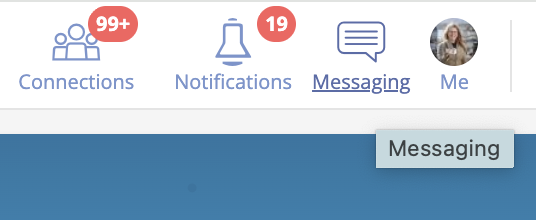
You can now see who is online in real time, and message any member that you are connected to. There is a new messaging tab next to your profile photo.
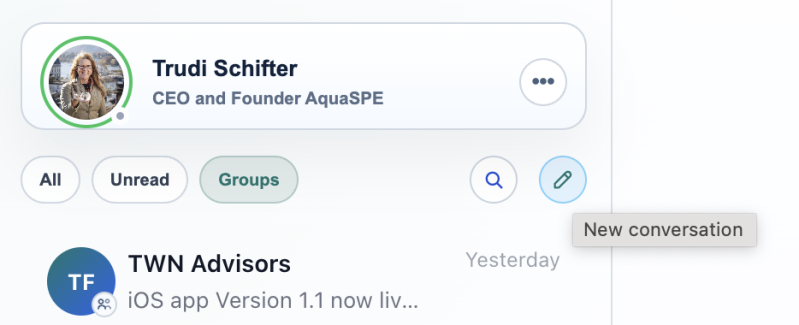
Group messaging is easy to set up, just give your group a name and invite your connections.
Notifications of new messages show up on the top banner of the website and on the cell phone app via push notifications.
Benefits of Secure Messaging
Why this is critical for water professionals!
The addition of secure messaging and native mobile apps with notifications on TheWaterNetwork.com significantly enhances the way regions, projects, and organizations can communicate and address water issues.
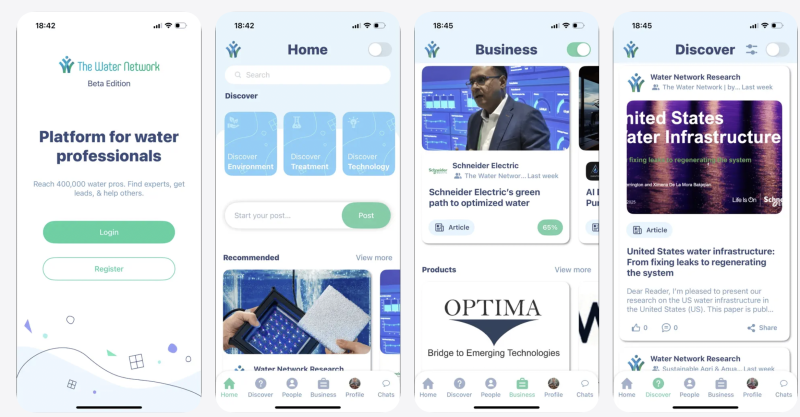
Here’s how these features can revolutionize water management:
Improved, secure communication :
- Confidentiality : End to end Encrypted for sensitive discussions
- Connections only communication : members must be connected to one another for one on one messaging, or be in the same group to be included in group messages.
- Real-time Collaboration : Secure messaging allows for real-time communication between stakeholders, which is crucial for timely decision-making and coordination.
- No public cloud storage: These three protections work together to reduce exposure to the most common threats: unsolicited contact and phishing, interception of message content, and third-party data exposure.
Accessibility and Convenience :
- Mobile Access : Native mobile apps make it easier for users to stay connected and engaged from anywhere, at any time.
- Push Notifications : Notifications keep users informed about messages in real time
Enhanced Project Management :
- Efficient Coordination : Secure messaging facilitates more efficient coordination among team members, stakeholders, and partners, helping to streamline project workflows.
- Documentation and Record Keeping : Keeping a record of communications in a secure environment helps in tracking project progress and making informed decisions.
- Higher Security:
- OMEMO end-to-end encryption , the same cryptographic lineage as Signal. Messages are encrypted on the sender's device and can only be decrypted by the recipient's device(s) — your own server operators, and anyone who compromises the server, cannot read message content even in principle, because the server never holds the decryption keys.
- Server location in Germany & data sovereignty WhatsApp runs on Meta's public cloud infrastructure (AWS, Microsoft Azure). Your data — metadata, contact graphs, message routing — flows through Meta's servers. TheWaterNetwork running its own XMPP server means all message data stays within AquaSPE's infrastructure, under Swiss jurisdiction, subject to Swiss privacy law (among the strongest in the world).
- No third-party data access Meta has commercial incentives to analyse metadata even if message content is encrypted. A self-operated XMPP server has no such incentive — there is no advertising business model extracting value from communication patterns.
- Controlled customisation of encryption A customised XMPP deployment with OMEMO encryption (the Signal Protocol adapted for XMPP) end-to-end. WhatsApp uses Signal Protocol too, but Meta controls the key infrastructure and backup systems — iCloud/Google Drive backups of WhatsApp are a well-documented vulnerability
- No metadata harvesting WhatsApp collects substantial metadata even with E2E encryption — who messages whom, when, how often, from which device, which location. A self-hosted XMPP server collects only what you choose to log.
- Closed, verified user base TheWaterNetwork's XMPP is accessible only to verified water industry professionals — the attack surface is radically smaller than a billion-user public platform that is a constant target for exploits, state-level attacks, and social engineering.
- Regulatory compliance For water infrastructure operators — utilities, regulators, engineers — communications about critical infrastructure arguably shouldn't transit public cloud servers at all. Our private messaging layer directly addresses that compliance concern (EU NIS2 directive, for example, increasingly requires this for critical infrastructure operators).
Potential Impact on Water Management:
Timely Solutions :
- Faster Response Times : Immediate communication can lead to quicker identification of issues and implementation of solutions.
- Crisis Management : In case of emergencies or urgent water issues, secure messaging allows for swift coordination and response.
Broader Reach and Inclusivity :
- Global Collaboration : Facilitates collaboration across different regions and time zones, breaking down geographical barriers.
- Inclusive Participation : Mobile access ensures that even those in remote or underserved areas can participate and contribute.
Knowledge Sharing and Innovation :
- Best Practices : Easy sharing of best practices, case studies, and innovations can lead to more effective and sustainable water management solutions.
- Continuous Learning : Ongoing discussions and instant access to expert advice support continuous learning and improvement.
Efficiency and Productivity :
- Streamlined Processes : Improved communication tools lead to more streamlined processes, reducing delays and increasing productivity.
- Task Management : Enhanced coordination and task management features help keep projects on track and within scope.
Examples of Use Cases:
Regional Water Management :
- Collaborative Planning : Regions can collaborate on water management plans, share resources, and coordinate efforts more effectively.
- Data Sharing : Real-time sharing of water quality and usage data helps in making informed regional policies and decisions.
Project Coordination :
- Stakeholder Engagement : Group chats effectively keep all stakeholders informed and engaged through continuous communication.
- Problem Solving : Quickly address and solve issues as they arise during the project lifecycle.
Organizational Communication :
- Internal Coordination : Organizations can improve internal communication, leading to better alignment and execution of strategies.
- External Partnerships : Strengthen partnerships with other organizations, NGOs, and governmental bodies through secure and efficient communication channels.
Conclusion:
Integrating secure messaging and native mobile apps with notifications on TheWaterNetwork.com greatly enhances communication, collaboration, and overall efficiency in addressing water issues.
By making it easier for users to connect, share information, and coordinate efforts, these features could help revolutionize how regions, projects, and organizations manage and solve water-related challenges.
Tags
Category: Case Studies
- Water Security
- Water Security
- Water Security
- urban water security
- Water Security
- Security
- Germany