Are Companies Prepared for $14 Billion in Water Risk?
Published by Water Network Research, Official research team of The Water Network in Business
In 2016 alone, companies around the world may be facing $14 billion of water-related impacts from drought, flooding and increased water stress.
The financial impact of water risk in 2016 has grown by more than five times since last year, but most companies aren’t moving fast enough to disclose and protect themselves from the damage of drought, waterway pollution and flood.
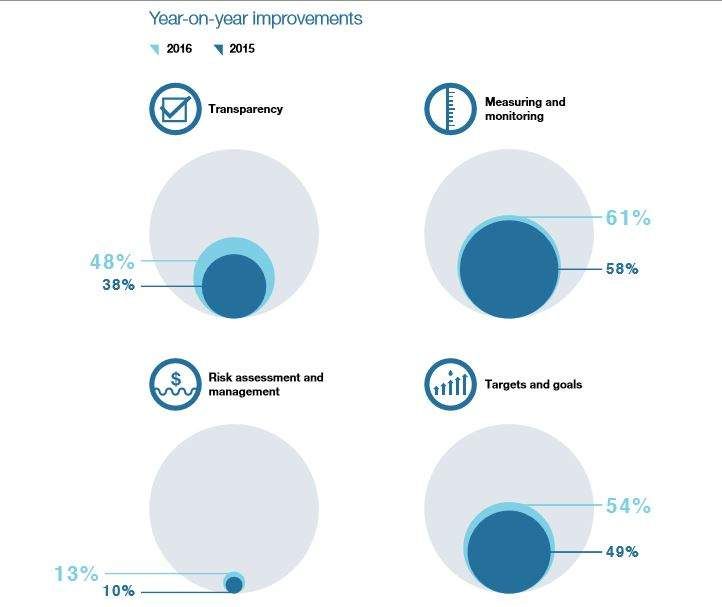 In 2016 alone, companies around the world may be facing $14 billion of water-related impacts from drought, flooding and increased water stress exacerbated by climate change, the cost of pollution and increased environmental regulation — compared with $2.6 billion in 2015.
The data was culled by CDP in its new report, "Thirsty Business: Why Water is Vital to Climate Action," presented at CDP’s Global Water Forum at COP22 in Marrakesh. CDP’s seven-year-old water program works with 643 institutional investors, representing $67 trillion in assets, to inform investments for a greener future.
More companies than ever have shown concern for water risk: 607 companies responded to CDP in 2016, a 49 percent increase in responsiveness since last year.
Fittingly, companies are aware of a growing number of risks because of direct impacts to their finances. Over a quarter featured in the CDP report already have experienced serious water-related damage.
Draining corporate finances
For example, in the U.S., General Motors spent $8 million due to increased water rates from drought conditions and hydro-electric costs. United Technologies Corporations disclosed that it invested $1.7 million in water-saving infrastructure in South California, now on the brink of what NASA warned could become a "decades-long megadrought."
"While the drought will invariably break at some point, we believe the likelihood of recurrence associated with climate change make a water constrained Southern California a permanent condition," United Technologies Corporations told CDP.
Costs were high internationally, as well: Japanese power company Tepco disclosed spending nearly $10 billion to address groundwater pollution from the Daiichi nuclear power plant after the 2011 tsunami.
South African miner Gold Fields Limited reported a $92 million impact from the capital and operating costs of diesel-fired power generation plants, which comprised 14.5 percent of its total capital expenditure. The company had to use diesel make up for the declining ability of its Ghanaian hydropower plants.
Overall, companies were affected by 4,416 water risks in the CDP report, and expect 54 percent of them to further materialize within the next six years. The most commonly cited impacts were:
- Higher operating costs, such as those related to emerging water quality regulations. One company, Suncor Energy, may need to push its total R&D costs above $165 million over the next few years to keep up with emerging water quality standards.
- Plant or production disruption, such as Anglo American Platinum Ltd, which had to implement a $5.8 million upgrade of sewage works around a mine to mitigate risks to the water supply.
This year’s findings offer two clear lessons for the private sector, said CDP CEO Paul Simpson. "Firstly, that water risks can rip the rug from right under business, posing a serious threat to bottom lines. Secondly, and crucially, water will be a fundamental global commodity in the transition to a low-carbon economy.
Every drop of clean, sustainable water will be essential for the emissions reduction activities countries and companies have planned. This is a wake-up call to companies everywhere to take water more seriously.”
Read full article at: Green Biz
Tags
Category: Business
- Water Quality
- Business Strategy
- Drought
- Business Analysis
- Flood