I-Drop Water to Compete for Share in $1m Funding
Published by Water Network Research, Official research team of The Water Network in Business
James Steere, co-founder of I-Drop Water, is the South African winner in Chivas Regal's The Venture III.
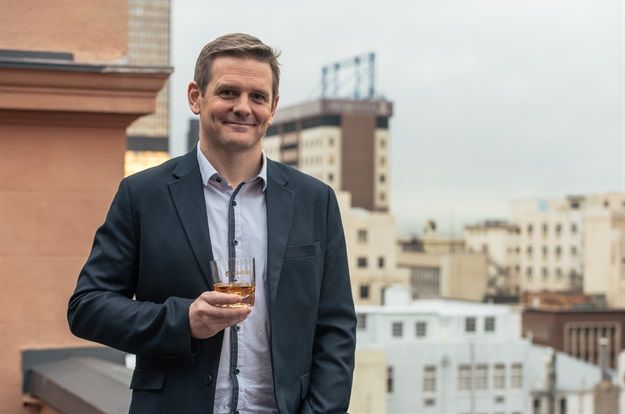
The competition entails a global search to find, mentor and support startups that are making a difference in their communities. Steere will travel to Los Angeles later this year to compete for the global prize. The annual competition sees entrepreneurs compete for a share of $1m in funding.
Biz Community caught up with Steere to find out more about the vision behind his social enterprise, the technology behind I-Drop Water, and what his plans are for the funding should the SA startup win.
There are a couple of wicked problems today we've yet to solve, why did you choose access to safe drinking water?
My wife, Kate, and I founded I-Drop Water together and it wasn’t so much a choice, but instead the recognition of an opportunity at a moment in time where our personal and professional lives allowed us to go all-in on solving drinking water as a challenge.
Kate is a business powerhouse with an undergraduate degree from the Wharton School in the USA and an MBA from Oxford University, where we met. I’m the water nerd, ideas and people person. Bringing these two different skillsets together is the reason this good idea is now a growing business.
The sheer size of the social challenge and business opportunity in drinking water was certainly something that appealed to us both. Our ambitions with I-Drop are to completely transform the drinking water industry around the world to get safe, affordable drinking water to the 1.8-billion people who need it. Ultimately, though, it comes down to us taking the (crazy?) step to leave our jobs and start this business and go from there.
Tell us a bit about your background and how you came up with the I-Drop Water technology.
I’ve worked in drinking water purification technology and products for many years, prior to which I was in management consulting. For years, as I travelled around Africa, I was always frustrated by the fact that the technology already exists to efficiently and effectively make water safe for drinking, and yet wherever I travelled there were people with relatively low incomes buying huge amounts of bottled water at high prices to try and avoid getting ill.
What struck me is that very often, the same small grocery store selling this drinking water had a water supply of some kind from a borehole, tap or water tank. I-Drop was born from the idea of purifying water in the store and thereby stripping out the huge cost of centralised purification, bottling and transport. It’s a similar idea to solar power or mobile phones that have replaced expensive fixed line transmission and communication infrastructure. 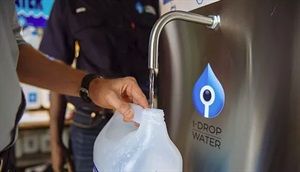 The real challenge came from making this simple idea a reality. In places where people need this solution the most, there are typically smaller grocery stores that can’t afford to invest in water purification capital, and so we found a way of putting an I-Drop machine in a grocery store at no cost to the shop owner.
We use GSM (sim card) electronics to enable a revenue share model over ongoing sales from our machine. Keeping this real-time monitoring capability over each of our machines, whether they are in Ghana, Zimbabwe, Botswana or South Africa, allows us to retain control over the fleet without the cost of people driving large distances to oversee individual machines.
What are your plans for the funding should you win?
We are incredibly proud to be representing South African entrepreneurship at the global Chivas Venture competition and are going to do our absolute best to try and bring it home for SA. Winning the competition would be a game-changer for us and enable us to double our current fleet of I-Drop machines here in SA and other African countries, massively increasing our impact.
What's been the impact of I-Drop Water so far?
We’re still small but growing fast. We’re currently in about 60 shops, from large chain-store supermarkets to small tuck-shops in townships.
We’ve sold almost half a million litres of drinking water, reduced plastic waste by 1,700 kgs and, compared to other purification technologies, reduced water waste by 1.1-million litres. We’ve also generated hundreds of thousands of rands of economic activity in local economies through water sales in small grocery stores, and at R1 per litre here in SA, we’ve increased the affordability of safe drinking water to a price that just about everyone can afford.
We’re also working on a cross-subsidy model where we’re allocating a small portion of sales revenue to provide free drinking water to a school in Soweto. Our position on this is that even at R1 / litre, some people will still never be able to afford to pay and so we’re covering the cost of providing drinking water to these 700 children and staff with water sales from people who can pay.
Full interview originally posted on: Biz Community
Tags
Category: Business
- Startups
- Drinking Water Security
- Water Scarcity
- Water Access
- Technology
- Water Supply
- Scarcity
- Water Supply
- Drinking Water
1 Comment
James, can you tell us more about your treatment technology and its cost per liter, thanks.
Published by Peter McChesney, Business Development Lead at MadiDrop PBC