New Investment Model To Restore Nature
Published by Water Network Research, Official research team of The Water Network in Business
Impact investors should pay attention to The Nature Conservancy's 'Water Sharing Investment Partnerships model, meant to ease water scarcity while also restoring watery ecosystems.
WSIPs leverage existing water markets for conservation purposes, TNC explains in a new report called, Water Share: Using Water Markets and Impact Investing to Drive Sustainability, which the NGO published this week.
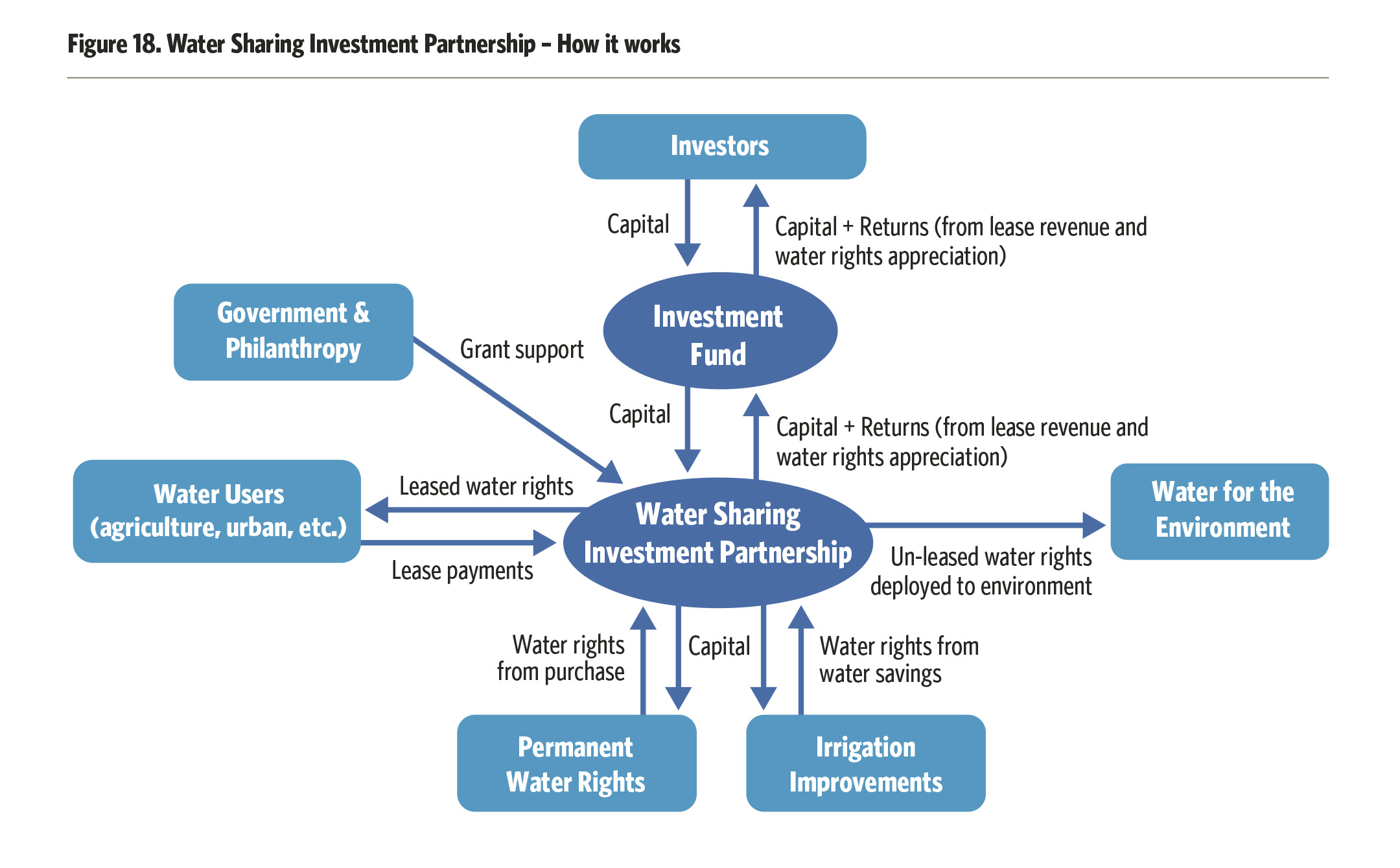
Essentially, they solicit investor capital to acquire a portfolio of water rights. Most of these rights are either leased or sold back on the market, giving investors a financial return and ensuring farmers and cities have access to enough water. A WSIP can acquire water rights by outright purchases, but also by collaborating with farmers to implement water saving measures in irrigation.
Both of these methods free up water rights allocations to be used to divert water back to nature, restoring water flows in a manner that sustains healthy ecosystems.
“The WSIP model is one of several tools the Conservancy is developing to improve water security among all water users,” Lauren Ferstandig, Director of Product Development for TNC’s NatureVest, said in a statement.
“The hope is that these partnerships can help provide a more water-secure future for cities, agriculture, industries and nature.” NatureVest is TNC’s impact investment unit.
The constant tug-of-war between different entities such as farming and cities enables global water shortages to rage on. Just a glance at the World Resources Institute’s Aqueduct Water Risk Atlas reminds viewers of the severity and wide range of water-related risks across the globe.
The United Nations predicts 1.8 billion people will be living in countries or regions with absolute water scarcity by 2025.
Moreover, according to WWF’s most recent Living Planet report, freshwater species populations have declined 75% between 1970 and 2010. This statistic highlights one of the report’s messages, which is that nature is the silent and often unseen victim of water scarcity. Water depletion is a leading cause for decline.
“We need to get smarter about how we use every drop of water,” Brian Richter, lead report author and Chief Scientist for the Water program at The Nature Conservancy, said in a statement.
“We can no longer build our way out of water scarcity. The closer water consumption grows toward the limits of water availability, the more we put ourselves at risk. But new approaches in water management can shift us toward long-term sustainability.”
What’s so Good about Water Markets?
Some practitioners in the water space say water markets can drive the needed water-efficiency practices that will ultimately lead to sustainability. When water carries a monetary value, those who have the rights to water supplies are motivated to conserve because they can sell the surplus for a profit, the Conservancy explains.
The report highlights six noteworthy benefits of water markets:
- Stimulating water savings – By establishing a monetary value for water, water markets can provide strong stimulus for reducing consumptive water use because a water-saving entity can be rewarded financially by selling or leasing the portion of their water rights that is no longer needed. When water is appropriately priced it also discourages waste.
- Increasing water availability – By accessing additional water through a market, a community or government can avoid expensive, time-consuming and environmentally-damaging alternatives for increasing their water supplies.
- Improving community flexibility – By enabling the transfer of water between users, individuals and communities can adapt more quickly to changing conditions, personal preferences and needs. This includes providing farmers with new, revenue-generating opportunities and options for averting irrigation shortages during droughts.
- Improving water’s productivity and allocation efficiency – By discouraging wasteful or low-value uses of water, the trading of water facilitates reallocation of water rights to more productive uses, commonly resulting in more revenue generation in local economies.
- Returning water to nature – Markets offer opportunities for conservation interests and government agencies to restore water flows in depleted freshwater and estuarine ecosystems by purchasing water in the market and then dedicating its use to environmental purposes.
- Improving accounting for water use and availability – When water is appropriately priced and water assets are being traded, water users are more willing to participate in transparent water measurement and reporting practices
Read full article at: Ecosystem Marketplace
Tags
Category: Business
- Business Development
- Water Scarcity
- Business Strategy
- Ecosystem Management
- Funding Partnerships
- Business Studies
- Investments