Success for Water Industry is About Much More Than Financial Capital
Published by Water Network Research, Official research team of The Water Network in Business
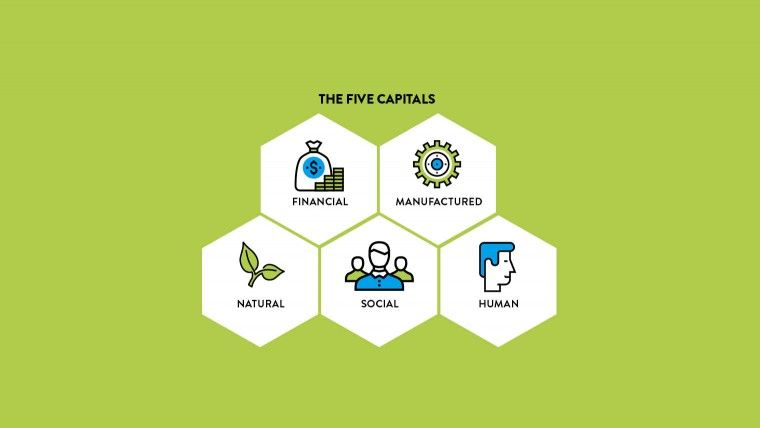
To meet a growing number of challenges, water companies need to unlock their natural, human and social capital, as well as financial.
From politics and population to the environment, the water industry is facing greater and more varied challenges than ever before. Population growth is particularly pressing, with the UK population projected to increase by 9.7 million to 74.3 million in mid-2039.
Compounding this is the increase in single-occupancy households, which tend to use twice as much water per head than a property with four people.
Added to these pressures, water companies around the country are likely to continue to see their revenues restrained, as seen in the 5 per cent average reduction at the 2014 price review, while there is a growing requirement to provide customers with a better service, protect the environment and consider the needs of society as a whole, still satisfying other stakeholders.
According to a number of industry thought leaders, such as AECOM, a fully integrated global infrastructure firm that advises a number of the largest water companies in the UK, to meet these challenges the water industry needs to think beyond purely financial considerations.
“The industry is doing a lot, but it needs to become more forward looking,” says Martin Williamson, government and public sector lead for water at AECOM. He argues that water companies need to consider natural, human and social capital, as well as financial, in their business planning. “These other capitals have been around for some time, but people have sometimes struggled to include them in their business cases. By making use of monetised values, which are becoming more accepted now for these other forms of capital, the leaders in the sector can realise long-term benefits that provide not only medium-term solutions, but a long-term legacy. Invest now and you will see the outcomes.”
“Thinking beyond just the traditional financial-capital model and exploiting natural, social and human capital is helping to build a more sustainable, more financially secure water industry”
Mr Williamson’s colleague Adrian Rees, director of asset management for water, offers an example of these other capitals in action: “Installing a sewer will prevent flooding and that will have an immediate effect. However, you could opt instead for a more sustainable drainage system that creates more green spaces and provides activities and involvement for local people. This has much wider benefits – natural, social and human capital. Anglian Water, for instance, is quantifying the social benefits of its volunteer programmes in beach and river care.”
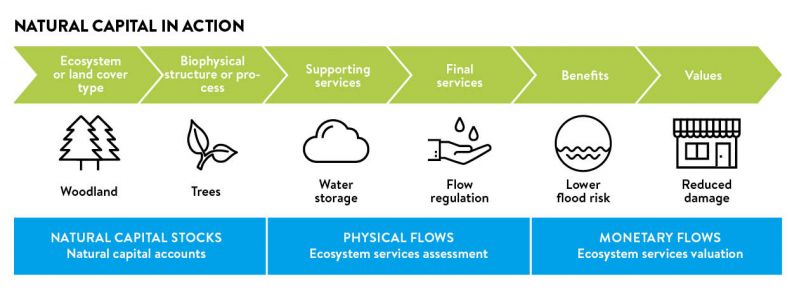
Employing natural capital requires longer-term, more holistic thinking. “You might have a water treatment works that’s treating discoloured water to remove discolouration,” says Mr Rees. “One of the reasons for that discolouration will be runoff from peaty catchments.
So if you use a number of techniques to manage those upland catchments, you reduce the discolouration and you reduce your capital and operational expenditure by not having to treat that water as intensively. But you also get collateral benefits because the flow from those uplands is slowed and so downstream areas are less prone to flooding.”
A catchment management approach can take a while to bed in and produce returns, but Defra, water services regulator Ofwat and others are encouraging it, whereas in 2004 there was just one example of sustainable catchment management in companies’ plans – United Utilities’ SCaMP project – ten years later there were more than 600 actual or potential schemes put forward to Ofwat.
Already some water companies are making changes to their structure to embrace natural, social and human capital. “Engineers aren’t environmental economics specialists and why would they be?” says Adrian Rees. “But we provide tools that in essence tell them ‘if you do this you’ll attract these benefits’.
For example, at Yorkshire Water’s Rivelin Water Treatment Works, we’ve been able to show the economic benefits of partially burying the plant and incorporating a green roof in terms of natural and social capital. They’re applying this thinking to every investment decision across thousands of their assets – you can imagine the benefits this will generate.
Read more at: Raconteur
Tags
Category: Business
- Corporate Strategy
- Strategy Implementation
- Capital Management
- Business Development
- Employment benefits
- Community
- Human Capital Management