Global water crisis could cost trillions – DW – 08/25/2025The economic value of functioning freshwater ecosystems was estimated at $58 trill...
Published by Water Network Research, Official research team of The Water Network
Global water crisis could cost trillions – DW – 08/25/2025
The economic value of functioning freshwater ecosystems was estimated at $58 trillion (€49.4 trillion) in 2023 — or about 60% of global gross domestic product (GDP), according to conservation organisation, the World Wildlife Fund (WWF).
'Not enough water to go around'
High water stress in arid, drought-stricken countries across Africa and the Middle East is set to cause an economic decline of 25% over the next 20-30 years, noted Quentin Grafton, the UNESCO Chair in Water Economics.
This also means less money for necessary food imports or the major infrastructure required for easing water scarcity, such as dams and desalination plants.
"This is crunch time. We're going to have to adapt in a much more rapid way," said Grafton of the need to deal with the ways water stress will hollow out global economies.
How a Niger woman grows a garden despite extreme weather
As water shortages impact food supplies, economic activity and employment in these regions, social and political upheaval can follow, explained Grafton, who is also an economics professor at the Australian National University.
Displacement and mass migration are consequences, leading to instability in regions like southern Europe as people cross the Mediterranean Sea from areas experiencing increasing desertification.
The problem is amplified since implementing solutions also costs a lot of money. Diverse freshwater ecosystems can reduce the duration and severity of droughts but have been drained through development and over-irrigation. These require major rehabilitation, with the world having lost a third of its wetlands since 1970, notes the WWF.
The water crisis is also set to slow the rise of powerful developing economies. Grafton says India does not have enough water to maintain, for example, the coal power plants producing thermal electricity that has underpinned rapid economic growth and helped alleviate poverty across the nation.
"Their goal is 7% growth but this is a fantasy," he said of the nation with 18% of the world's population and only 4% of its freshwater. "There's not enough water to go around."
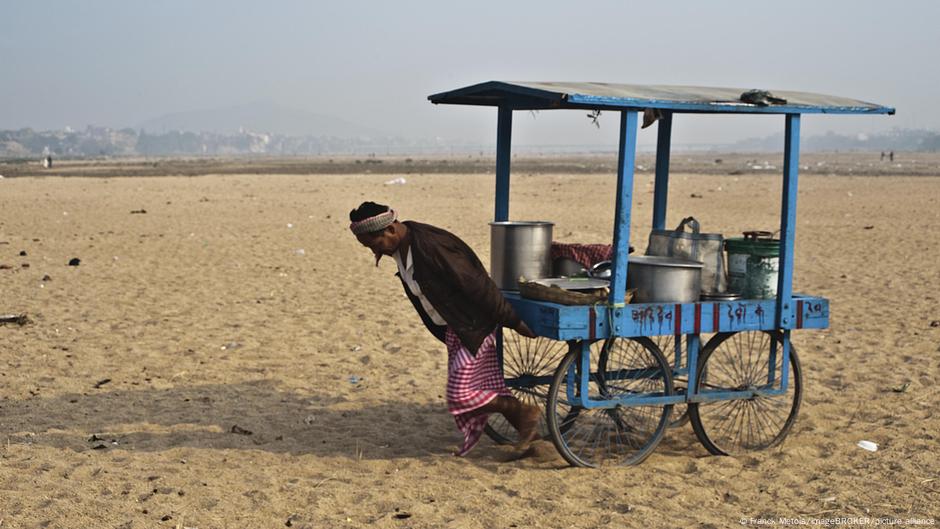
India's rural poor suffer most from water scarcity. Over-exploitation of groundwater is a major concern as the water table recedes. Solutions include programs that fortify local water catchments with earthen dams that better retain monsoon rains before the dry season.
The economic value of functioning freshwater ecosystems was estimated at $58 trillion (€49.4 trillion) in 2023 — or about 60% of global gross domestic product (GDP), according to conservation organisation, the World Wildlife Fund (WWF).
'Not enough water to go around'
High water stress in arid, drought-stricken countries across Africa and the Middle East is set to cause an economic decline of 25% over the next 20-30 years, noted Quentin Grafton, the UNESCO Chair in Water Economics.
This also means less money for necessary food imports or the major infrastructure required for easing water scarcity, such as dams and desalination plants.
"This is crunch time. We're going to have to adapt in a much more rapid way," said Grafton of the need to deal with the ways water stress will hollow out global economies.
How a Niger woman grows a garden despite extreme weather
As water shortages impact food supplies, economic activity and employment in these regions, social and political upheaval can follow, explained Grafton, who is also an economics professor at the Australian National University.
Displacement and mass migration are consequences, leading to instability in regions like southern Europe as people cross the Mediterranean Sea from areas experiencing increasing desertification.
The problem is amplified since implementing solutions also costs a lot of money. Diverse freshwater ecosystems can reduce the duration and severity of droughts but have been drained through development and over-irrigation. These require major rehabilitation, with the world having lost a third of its wetlands since 1970, notes the WWF.
The water crisis is also set to slow the rise of powerful developing economies. Grafton says India does not have enough water to maintain, for example, the coal power plants producing thermal electricity that has underpinned rapid economic growth and helped alleviate poverty across the nation.
"Their goal is 7% growth but this is a fantasy," he said of the nation with 18% of the world's population and only 4% of its freshwater. "There's not enough water to go around."
India's rural poor suffer most from water scarcity. Over-exploitation of groundwater is a major concern as the water table recedes. Solutions include programs that fortify local water catchments with earthen dams that better retain monsoon rains before the dry season.
Tags
- Water Scarcity
- Economics
- Water Supply
- Solutions
- Economics Of Water Resources Projects
- Domestic Water Use
- Niger