Wetlands International Restoring Wetlands in Kenya and Uganda
Published by Water Network Research, Official research team of The Water Network in Non Profit
Dutch-based organisation Wetlands International announced that it will contribute to reduce water scarcity by reshaping policies, investments and practices in three highly vulnerable wetlands in Kenya and Uganda
From Saturday 26 till Tuesday 29 September the 2015 Clinton Global Initiative (CGI) Annual Meeting is taking place in New York. On Monday, September 28 Jane Madgwick, CEO of Wetlands International, a CGI member, spoke about one of the central themes ‘Water Scarcity’. With 20 percent of the world’s GDP and 36 percent of the global population located in severely water stressed areas, the growing demand and competition for freshwater will be one of the biggest global challenges we face. She emphasized that wetland ecosystems are essential for storing and regulating water and the continuing loss and degradation of wetlands is a strong driver of increasing water risks.
Reaching the Sustainable Development Goals will depend on reversing the current trend of loss and degradation of ecosystems – and especially wetlands. She calls to action businesses, governments and civil society to reinstate wetlands as key, natural infrastructure that will help enable equitable access to clean water, reduce the risks of floods and droughts, plus reverse land degradation and meet future food needs.
Wetlands International is announcing a new CGI Commitment to Action to reshape policies, investments and practices in three highly vulnerable watersheds in Kenya and Uganda. Demonstrating an ecosystem approach to increase water security and community resilience, the intention is to attract interest of global leaders and to stimulate replication and scaling up of the approach elsewhere. The commitment was featured as an exemplary approach to addressing critical challenges during the session on Climate Change and Resiliency: Redefining Business as Usual, also on Monday September 28.
Water Scarcity: from the Wetlands to the Water Glass
We all depend on water and yet we use it, waste it and degrade it without realising its true value. The question of how best to manage water risks is high on the agenda of businesses. Water scarcity is set to intensify over the coming decade while the risks of devastating floods are also increasing. Climate change will add to the severity of the impacts. Joined up approaches between the public, private, and nonprofit sectors are urgently needed to design and implement solutions.
Drawing on the experience of Wetlands International, Jane engaged with CGI members to discuss how to
connect public, private and nonprofit actors spanning the life cycle of water use,
improve industrial and agricultural water use to ensure clean water for communities, and
invest in solutions that incentivize ecosystem conservation and access for all.

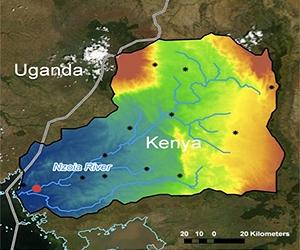

Water secure, resilient communities in Kenya and Uganda
According to the World Health Organization, in Kenya and Uganda about one-third of the population lack access to clean water and two-thirds lack proper sanitation. Working here in three vulnerable watersheds, Wetlands International, through a new CGI Commitment to Action, will empower civil society to engage with governments and the private sector and stimulate informed choices for equitable water sharing, land use and infrastructure development. Tools such as mapping wetland functions and values across watersheds and undertaking risk screening of investment plans, are applied, as well as ensuring that vulnerable groups, such as downstream communities, and women, are given a voice. The benefits of better watershed management will impact the lives of thousands, safeguarding water supplies and reducing disaster risks. The estimated investment of the commitment is 2.5 million US dollars.
Wetlands International is supported in this commitment by two new multi-year, multi-million Strategic Partnerships with the Dutch Ministry of Foreign Affairs: Partners for Resilience, led by the Netherlands Red Cross, also with the Red Cross Climate Centre, Cordaid, CARE Netherlands, and many Kenyan and Uganda partners, and WASH IT!, led by IRC, joined by SIMAVI, AKVO, and a wide range of local and regional partners.
Source: Wetlands
Read More Related Content On This Topic - Click Here
Tags
Category: Non Profit
- Water Scarcity
- Constructed Wetlands
- Wetlands