20% of Dams in Populated US Areas Lack Evacuation Plan
Published by Water Network Research, Official research team of The Water Network in Social
As the nation's 84,000 dams continue to age, a growing number of people downstream are at risk, experts say.
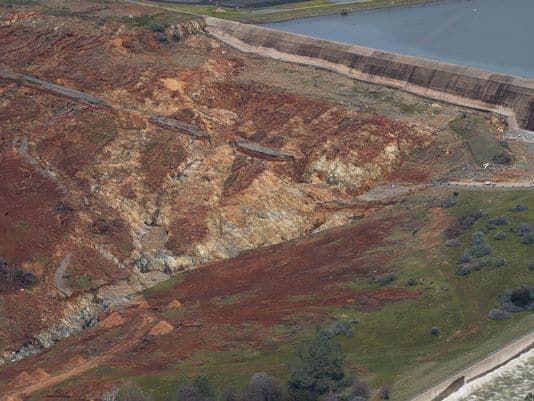
Oroville Lake's is seen from the air Feb. 13, 2017, near Oroville, Calif. Problems at the lip of the emergency spillway and the erosion damage seen below it caused officials to issue evacuation orders to more than 188,000 people downstream.(Photo: Elijah Nouvelage, Getty Images)
That's not only because of older infrastructure but also because of population growth around some of the dams. More than a quarter were developed primarily for recreational purposes, according to National Inventory of Dams data from 2016.
"The nation’s dams are aging, and the number of high-hazard dams is on the rise," according to a 2013 report from the American Society of Civil Engineers. "Many of these dams were built as low-hazard dams protecting undeveloped agricultural land. However, with an increasing population and greater development below dams, the overall number of high-hazard dams continues to increase."
That problem was highlighted this week as nearly 200,000 people evacuated an area near California's Oroville Dam, about 150 miles northeast of San Francisco. California water officials were worried that erosion they discovered Sunday at the top of its emergency spillway could send a 30-foot tall wall of water down the Feather River and through the Northern California cities of Oroville, Yuba City and Marysville.
Most U.S. dams were completed between 1950 and 1980. A small fraction of dams, 2.8%, were built before 1900. More than 4,000 dams have been built since 2000, accounting for 4.5% of all U.S. dams.
The latest data in the dams inventory, which the Army Corps of Engineers compiles, shows almost 15,500 dams across the USA are characterized as high hazard, meaning at least one person could die if the dam were to fail.
Among those high-hazard dams, nearly 1 in 5 lack an emergency action plan, a document dam owners maintain that includes critical information such as emergency contacts, details about the dam and an inundation map.
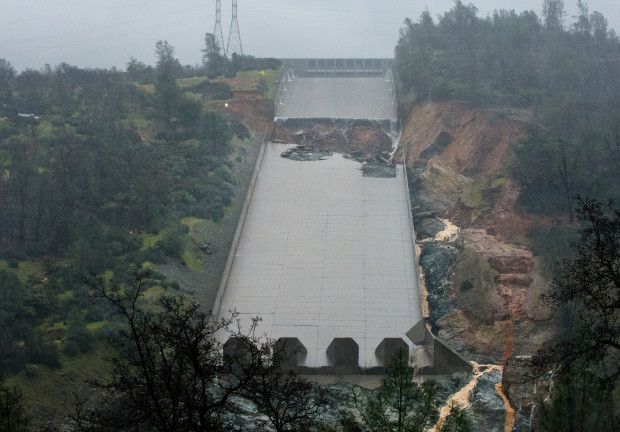
Oroville Dam
The average age of the United States' 84,000 dams is 52, according to the American Society of Civil Engineers' report.
In seven states, more than half of the high-hazard dams are operating without emergency action plans, according to the National Inventory of Dams:
• In South Carolina, it’s 96%.
• Mississippi, 88%
• Rhode Island, 82%
• Alabama, 79%
• New Mexico, 61%
• Florida, 58%
• North Carolina, 57%
Only three states — Louisiana, Maine and Tennessee — and Puerto Rico have emergency plans in place for all the dams with high-hazard potential.
In California, the problem is especially widespread.
California has more than 1,500 dams, according to the National Inventory of Dams database. Of those, 52% are considered high hazard, the fourth highest of any state.
Nationwide, 17% of dams are considered high hazard.
Almost two-thirds of U.S. dams are privately owned. Among the rest: Local governments own 20%; states, 7%; public utilities, 4%; the federal government, also 4%; and the remainder don’t have their ownership listed.
Understanding the level of risk associated with the nation’s dams can be difficult.
Read more at: USA Today
Tags
Category: Social
- Disaster Prevention
- River Studies
- Disaster Relief
- Dams
- Flood management
- Flood damage
- Occupational Safety
- Flood
- Engineering
- Safety Regulations
- Disaster Preparedness
- Disaster Management