Ethiopia Constructing One of the Biggest Dams in the World
Published by Water Network Research, Official research team of The Water Network in Government
Ethiopia is constructing one of the biggest dams in the world over the Nile, a major north-flowing river.
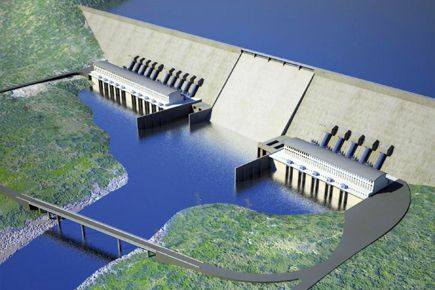
The Grand Ethiopian Renaissance Dam
The Nile's drainage basin, which is 6,853 km long, covers eleven countries in north-eastern Africa. Egypt, which is highly dependent on the Nile waters has been repeatedly opposing the project arguing the dam would result in reduction of water and negatively affect its irrigation schemes.
There are ongoing dialogues among riparian countries to come up with an accord on the fair exploitation of the Nile water.
Simultaneously, the construction of the dam has reached a critical stage of filling the reservoir with about 60 percent of the project completed so far. In relation to the 6th anniversary of the commencement of the construction of GERD, The Ethiopian Press Agency reporters have held an exclusive interview with Fekeahmed Negash, Director General at Eastern Nile Technical Regional Office. Here follows the summary of the interview. Excerpts:
On the fair exploitation of the Nile
Nile is a Trans-boundary River. Trans-boundary Rivers should be utilized by riparian countries fairly and equitably without significantly affecting each other's interests. The case in the Nile so far has been in the contrary. Inequitable utilization of the river prevails on the basis of unfair colonial and post colonial treaties.
The colonial treaties are those signed by the lower basin countries and their former colonizers. However, these treaties were discarded by the upper basin countries before and after they were signed. Starting from 1999, the Nile Basin Initiative (NBI) was set up to establish a Cooperative Framework Agreement (CFA) among the Nile basin countries. The Initiative has been convening dialogues and negotiations for about 13 years, since 1999.
All riparian countries of the Nile took part in the dialogue with the exception of Eritrea, who chose to participate as an observer and South Sudan, who wasn't an independent state by the time. Thus, the dialogue finally bore fruit in drafting a framework that ensures equitable use of the resource undeterred by prior challenges and disconcerting negotiations as many of the lower basin countries came hoping to snatch away all the advantages to themselves.
After the CFA was drafted, all member states have agreed to the terms in the framework except for the sub article under Article 14 which addresses water security issues. Accordingly, six countries have signed the CFA by 2010, out of which three of them have approved it in their respective legislative bodies.
The lower Nile riparian countries are currently exploiting the water resource in full scale; whereas the upper riparian countries have not yet gotten the chance to do so. Therefore, NBI has been relentlessly working to come up with concrete development projects that can showcase the advantage of the cooperation in general.
However, what has been achieved so far are very minimal as compared to the expected results. Yet, the tendency of cooperation has increased at the moment. Thus, if three more countries could sign the Agreement, the CFA would be an international protocol.
Further, it will be powerful in dictating the manner through which the resource of the river will be utilized leading to fair and equitable utilization of the water.
Read more: All Africa
Tags
Category: Government
- River Studies
- Water Resources
- River Engineering
- River Restoration
- Energy
- Hydropower
- Water Management
- Dams
- Hydrology
- International Cooperation