Israel Gets Wake Up Call For Its Bets On Desalination
Published by Dan Grech, Director at Global OTEC Resources in Social
There’s no doubt that Israel is the global poster child for seawater desalination, but that reputation could be starting to turn for the wrong reasons.

It’s time to take an orthogonal viewpoint on how this apparent ‘revolution’ is posing a major threat to the health of the people and environment.
Of course, Israel has relieved and empowered it’s people with their investment in desalination. Residents of one of the driest places on earth freed from chronic droughts by processing the water on their doorstep.
Israel may have gravely overlooked two long-term problems in favour of this solution. The county is set to consume 582 million cubic meters of water annually through it’s current five plants, increasing it’s output by five more plants by 2025.
A few weeks ago, we posed questions about whether Saudi Arabia had actually taken any measures to deal with brine. There was no response from national science institutions. NASA however, were kind enough to get back to us and confirm that nothing could be tracked from space and on-the-ground efforts were required.
Despite the obvious advantage of using potable water for agriculture and combat droughts there are number of significant health threats on the horizon.
Magnesium Deficiency
Israel is bracing itself for an increase in myocardial infarction (heart attacks) in areas and added reliance on magnesium-rich fertilisers.
Prof. Yona Amitai, a public health expert, warned that “more studies be done to examine the possibility of adding magnesium to the water. ”
Hila Gil, director of the desalination division in the Water Authority added “It might cost hundreds of millions of shekels a year. It could affect the price of the water, and we would be the ones who’d have to explain to the public why the prices have risen.”
Israeli isn’t a poor country, but what can it budget for running these experiments and rolling out a solution? Could this be more costly than effective R&D at an earlier stage?
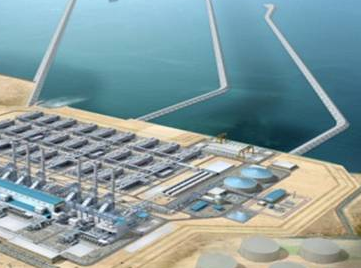 Wastewater
Gil began to express concerns with the high-concentrated brine ‘treated with chemicals’ (likely purified through Lime, CO2 & Soda…) that is being pumped back to sea.
A study is currently underway at the Israel Oceanographic and Limnological Research Institute in Haifa. Dr. Jack Silverman, one of the researchers involved, says they are trying to assess what effect the high salt concentrations will have on wildlife at the bottom of the sea bed.
“Along the bottom, there are very important processes that go on with respect to the survival of the ecological system. Our working assumption is that the concentration may influence these processes and, according to the initial findings, there is an effect”.
None of this should be surprising. It’s a positive sign that senior officials and locals are becoming more savvy to some of the long term risks before the next five plants are built.
It is a disappointing blow for desalination in general, as it will likely be the ‘scapegoat’ in the face of any disaster, whilst poor planning and execution is rather the culprit. We’re still at an infantile phase with this desalination in terms of global, scalable solutions and it would be catastrophic for public attention and funding being drawn away from the need to ‘make it better’.
I do hope the results of the mentioned studies make as many headlines as the utopian ones have, spurring nations that are planning large bets on seawater desalination to consider innovative ways of mitigating the very well known long term consequences.
See more on: Future Desalination
Tags
Category: Social
- Public Health
- Water Access
- Desalination
- Sea Water Filtration
- Sea Water Desalinisation
- Access
- Water & Wastewater
- Desalination
- Public Health