Brine Valorization PodcastThe Hidden Trillion-Dollar Secret in Seawater | Salty Water Podcast with Eric JankelIs seawater just a source of drink...
Published by Nikolay Voutchkov, Water Globe Consulting, LLC - President
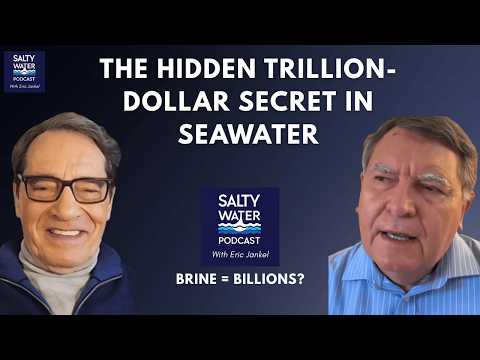
The Hidden Trillion-Dollar Secret in Seawater | Salty Water Podcast with Eric Jankel
Is seawater just a source of drinking water… or is it one of the largest untapped mineral resources on Earth?
In this episode of the Salty Water Podcast with Eric Jankel, internationally recognized desalination expert Nikolay Voutchkov explains why brine — long considered waste — may actually hold a trillion-dollar opportunity.
For decades, desalination plants have discharged concentrated brine back into the ocean. But what if that “waste” stream contains commercially valuable minerals like sodium chloride, magnesium, and even rubidium? What if desalination plants could become mining operations? And what if the economics have finally shifted enough to make it viable?
This episode explores the breakthrough technologies that may turn brine into a profitable resource ... and why the timing may be perfect.
We discuss:
Membrane-based brine concentration
Energy reductions compared to thermal crystallization
Nature-inspired membrane innovation
The economics of salt markets in the Middle East
Global warming’s impact on solar salt production
Zero liquid discharge pressures
The future of renewables in desalination
And a provocative conversation about emerging energy concepts tied to seawater
If you work in desalination, water reuse, water policy, or infrastructure finance, this conversation will change how you think about brine.
The Hidden Trillion-Dollar Secret in Seawater | Salty Water Podcast with Eric Jankel
youtube.com
Tags
- Desalination
- Sustainable Desalination
1 Comment
We have several proposed methods for desalination and desalination of salty springs and rivers, brackish water, and seawater, although most companies do this by reverse osmosis. We also have a new technology to prevent evaporation of water from rivers and lakes behind dams, which is less expensive and completely prevents water evaporation. We also have proposals for flood control, watershed and aquifer management, and climate change control at the lowest cost.
Published by alireza makvandi