Securing the World’s Water Future
Published by Asit Biswas, Distinguished Visiting Professor, University of Glasgow in Academic
The water sector will meet its greatest challenges from non-water related sectors and issues. Asit K. Biswas highlights key factors affecting the turning tide.
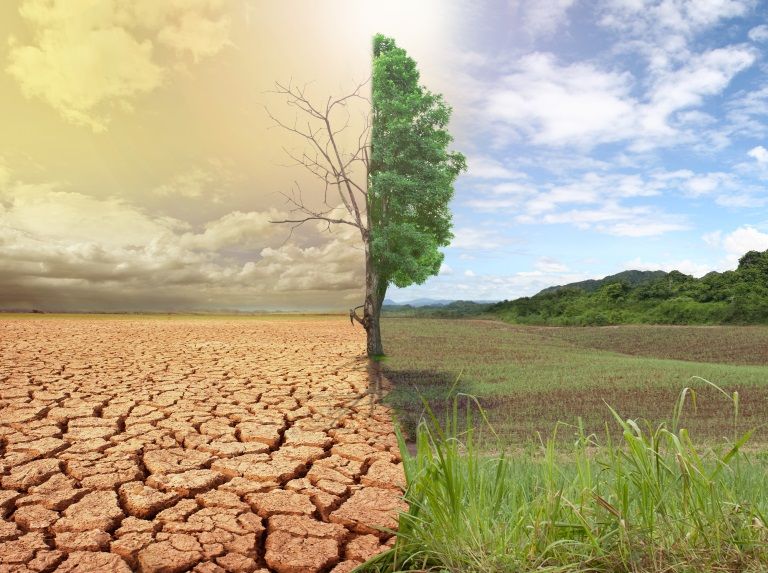
The view at present is that the world will face a water crisis that previous generations did not confront. Just typing “water crisis” in Google search topics on the Internet will bring 15,800,000 entries. Discussing water crisis is now the “flavour of the month”
Lawrence Peter once said, “An economist is an expert who will know tomorrow why the things he predicted yesterday didn’t happen today.”
In terms of predictions, most professions, including water, are not very different. While forecasting the future in an extremely difficult task, one issue can be predicted with complete certainty—the world in two decades will be vastly different to what is today.
The water sector is an integral component of the global system and thus would not be immune to these changes. However, unlike earlier times, many of these changes will originate from nonwater sectors and non water-related issues on which the water sector will have no, or at most, limited say or control. Thus, water management beyond 2025 will become an exceedingly complex task and this complexity can only increase with time.
For the water sector, there will be many drivers of change, some known but others unknown. Since these drivers are not mutually exclusive, their interactions will often contribute to changes that mostly will be very difficult to predict. Even for the known drivers, it would not be easy to predict their overall societal impacts in terms of timings of their onsets, magnitudes and temporal and spatial variations
21st century challenges
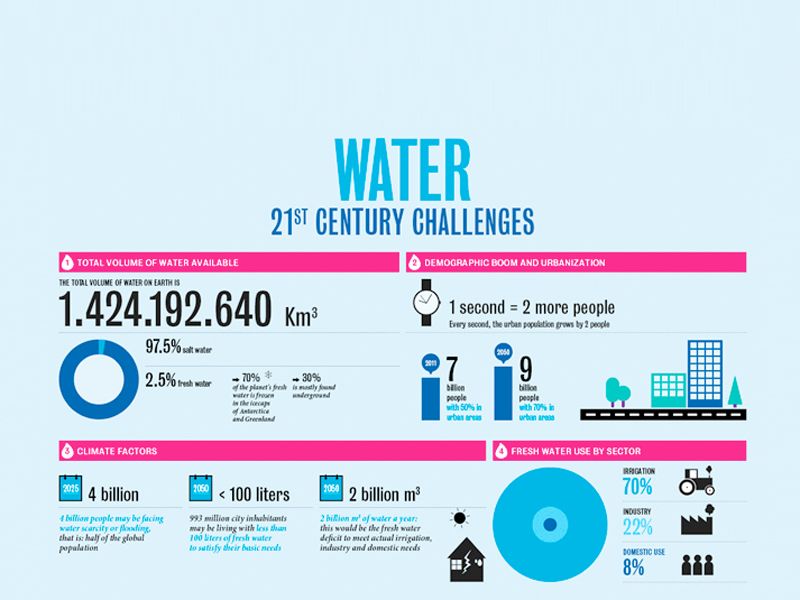
As the 21st century progresses, the water profession is facing a problem the magnitude, extent and complexity of which no previous generation had to face.
The profession at present faces two stark choices. It can either carry on as before with a business-as-usual and incremental attitude and endow future generations with a legacy of poor water governance and a plethora of partially resolved water-related problems, or accelerate efforts to identify, understand and then efficiently manage the likely problems of the future. All the major issues facing the world are increasingly interrelated.
The dynamics of the human future would not be determined by any one single issue such as water. Increasing population, urbanisation, globalisation and lifting standards of living require more food, energy and other raw materials, as ever-more efficient management of these resources. Achieving food, energy and environmental security would require good water governance on a long-term basis.
The common requirements for all practical responses must include greater and more efficient investments; use of more knowledge, technology and expertise; eschewing dogmatic and/or solutionin-search-of-a-problem approaches; functional institutions; and intensified cooperation and coordination between sectors as well as within countries and between countries.
During the next two decades, policy makers would have to juggle regularly with the competing, conflicting and changing needs of water for different purposes and by various stakeholders, as well as to coordinate effectively the increasing needs of concurrently assuring water, energy, food and environmental security in order to maximise human welfare.
Water will be one of the important common threads that will bind all the four concerns. The question of whether the world would face a water crisis is moot, given how water is being managed as a resource today. Poor water management will increasingly become a serious constraint for the development of many nations and also a serious constraint to a good quality of life.
Better management practices, coupled with rapid advances in technology, may lead one to be cautiously optimistic of the world’s water future
Written by Asit K. Biswas
Global-is-Asian
Tags
Category: Academic
- Water Management & Security
- Water
- Drinking Water Security
- Water Security
- Water Security
- Water Security
- Water Management
- Water