Making Old Water Infrastructure Smart
Published by Water Network Research, Official research team of The Water Network in Government
Despite the enormous amount of energy and resources that go into treating our water, an average of one-sixth of it is lost by the time it reaches the taps.
This loss happens as a result of pipeline leaks, breaks, poor efficiency, or even theft. Locating where exactly these losses are coming from, though, is easier said than done.
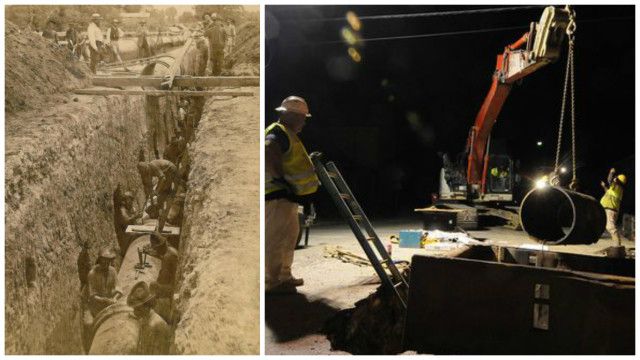
Manually inspecting pump stations and pipeline networks is rigorous, unrewarding work. Networks of water mains and pipes in any one city are far too vast to analyze completely.
Nowadays, utilities must expand to keep up with growing populations while also meeting more stringent drinking water guidelines. It is simply too much to ask that we continue to analyze systems for water losses the old-fashioned way.
To address this, electronic devices and smart systems are increasingly being built and connected to pipes and pump fixtures for a better understanding of our water infrastructure.
The Smart Water Handbook from Mueller Water Products delves into what the Internet of Things (IoT) has to offer for water infrastructure:
- Aging Water Infrastructure: While our current pipe networks are very old, some of them are still in good condition and don’t need replacing. Gathering data on water networks will help utility workers save replacement expenses for pipelines that are of the highest priority.
- Aging/Retiring Workforce: A large portion of the workforce will be leaving in the next 10 to 15 years and the generation entering the field will expect more advanced technology to be present. IoT technologies will help to compensate for the lost knowledge and experience.
- Non-Revenue Water Management and Leak Detection: In some public utility systems, leakage is such a serious problem that most of the water is not accounted for. Installing sensor devices of varying technology connected to a cloud can help utility workers know where the problem areas are.
- Real-Time, Online Water Quality Monitoring: Water quality monitoring stations makes it possible to keep an eye on residual chorine, pH and temperature in real time—important parameters when it comes to maintaining water quality as a whole.
- Interoperability of Smart Network Devices: An integration of existing databases will facilitate collaboration between utilities and a maximized use of gathered information.
Water leakage is an important issue in our drinking water treatment system, but the points in this list make it clear that utility workers have to worry about so much more than just delivering the sixth slice of pizza.
To understand just why these points were chosen as areas of the water industry where IoT has the most potential, let’s look at a few case studies, starting with the middle of the Pacific Ocean.
Source: Engineering.com
Tags
Category: Government
- Water Management
- Infrastructure
- Utility Pipe Network
- Pipes and Pipelines