Gruppo CAP: How Wastewater Treatment and Reuse Protect River HealthIn the Milan metropolitan area, 40 wastewater treatment plants and advanced m...
Published by Water Network Research, Official research team of The Water Network
Gruppo CAP: How Wastewater Treatment and Reuse Protect River Health
In the Milan metropolitan area, 40 wastewater treatment plants and advanced monitoring technologies help safeguard the health of river ecosystems
by Francesca Conti
RENEWABLE MATTER#60 - 2026 Rivers
02 NOV 2026 14:30Gruppo CAP: How Wastewater Treatment and Reuse Protect River Health
Share on social media:
In Europe, less than half of the rivers are currently in good condition. Various factors are to blame: municipal and industrial wastewater, agricultural fertilisers, waterway fragmentation, climate change, and increasingly long periods of drought alternating with violent rainfall events. In this scenario, rivers lose their ability to cleanse themselves naturally and become more vulnerable to pollutants. This is why wastewater management has taken on a central role in environmental policy: it is no longer just about wastewater disposal, but about protecting water bodies and, indirectly, irrigation and drinking water resources.
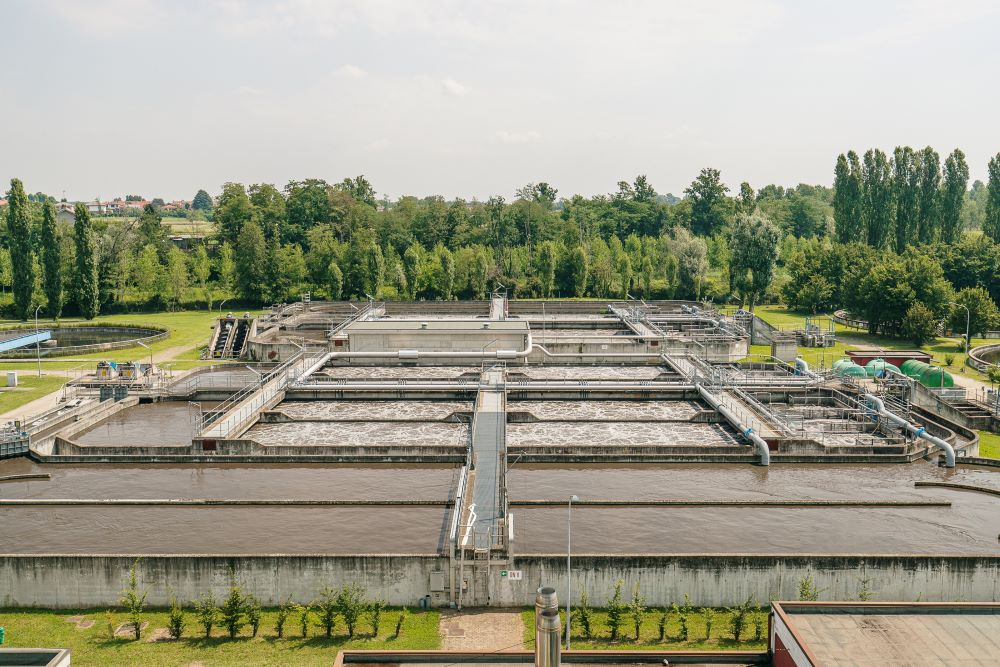
In the Milan metropolitan area, this role is carried out by Gruppo CAP, which manages the water cycle and returns treated water from households and businesses back to rivers. “As the operator of the integrated water service, through the management of 40 wastewater treatment plants distributed across the territory of the Metropolitan City of Milan, CAP is engaged every day in essential activities to protect the ecosystem health of surface waterways, canals and rivers above all,” explains Desdemona Oliva, the group’s Director of Research and Development.
Wastewater treatment translates into measurable interventions on river ecosystems. “Treatment plants process industrial and municipal wastewater, returning purified water to the environment that meets high quality standards and reduces suspended solids, organic substances and elements such as nitrogen and phosphorus,” Oliva continues. “Wastewater treatment thus contributes to the prevention of phenomena like eutrophication and diffuse pollution, improving the chemical and biological condition of watercourses, especially during periods of more severe drought, when treated water accounts for a significant proportion of river flow.”
Protecting waters from new pollutants
Alongside “traditional” pollutants, attention has shifted in recent years towards new contaminants that are difficult to intercept: pharmaceutical residues, PFAS and microplastics. These substances are not always removed by conventional treatments and can accumulate in aquatic organisms. Monitoring river quality, therefore, requires increasingly advanced tools that can provide a continuous picture of water conditions.
Gruppo CAP, Oliva notes, “uses an integrated watercourse quality monitoring system, which combines regular laboratory analyses, continuous multi-parameter probes and digital models to evaluate the impact of treated wastewater on rivers in real time.” This system goes beyond traditional parameters and includes new substances of environmental concern. Analyses “include traditional chemical and biological parameters, but also emerging micro-pollutants such as pharmaceuticals, PFAS and microplastics. Through investments in advanced technologies, remote monitoring and applied research, the company contributes to improving the chemical and ecological quality of the region’s rivers,” says Oliva.
An ever more precious resource
The issue of water is increasingly linked to this resource’s availability. With longer droughts and rising temperatures, the ability to recover treated water and put it back into circulation is taking on strategic value. Oliva notes that Gruppo CAP “is investing in research projects dedicated to the quality of watercourses, including UPSTREAM, an initiative focused on the monitoring and reduction of plastic and microplastic pollution in river basins, with experiments on the behaviour of contaminants and the effectiveness of innovative capture and treatment systems.” The research concerns not only the natural environment, but also the technological evolution of water management.
“In parallel, through the EU’s Digital Water City project, Gruppo CAP has developed advanced digital tools to improve water quality monitoring, such as predictive models, early warning algorithms and continuous monitoring platforms that integrate data from treatment plants, networks and water bodies. At the plant systems level, research is testing solutions such as ozonisation, active carbon, membranes and Nature-based Solutions to boost the removal of micro-pollutants before discharge.”
Tags
- Treatment
- Industrial Wastewater Treatment
- Wastewater Treatment
- Reuse
- Water and Wastewater
- Water and wastewater treatment