A UN-backed report says humanity has crossed into global water bankruptcy
Published by Water Network Research, Official research team of The Water Network in Social
A UN-backed report says humanity has crossed into global water bankruptcy, where water use exceeds nature’s ability to recover.
Published Jan 22, 2026 5:07 PM PST
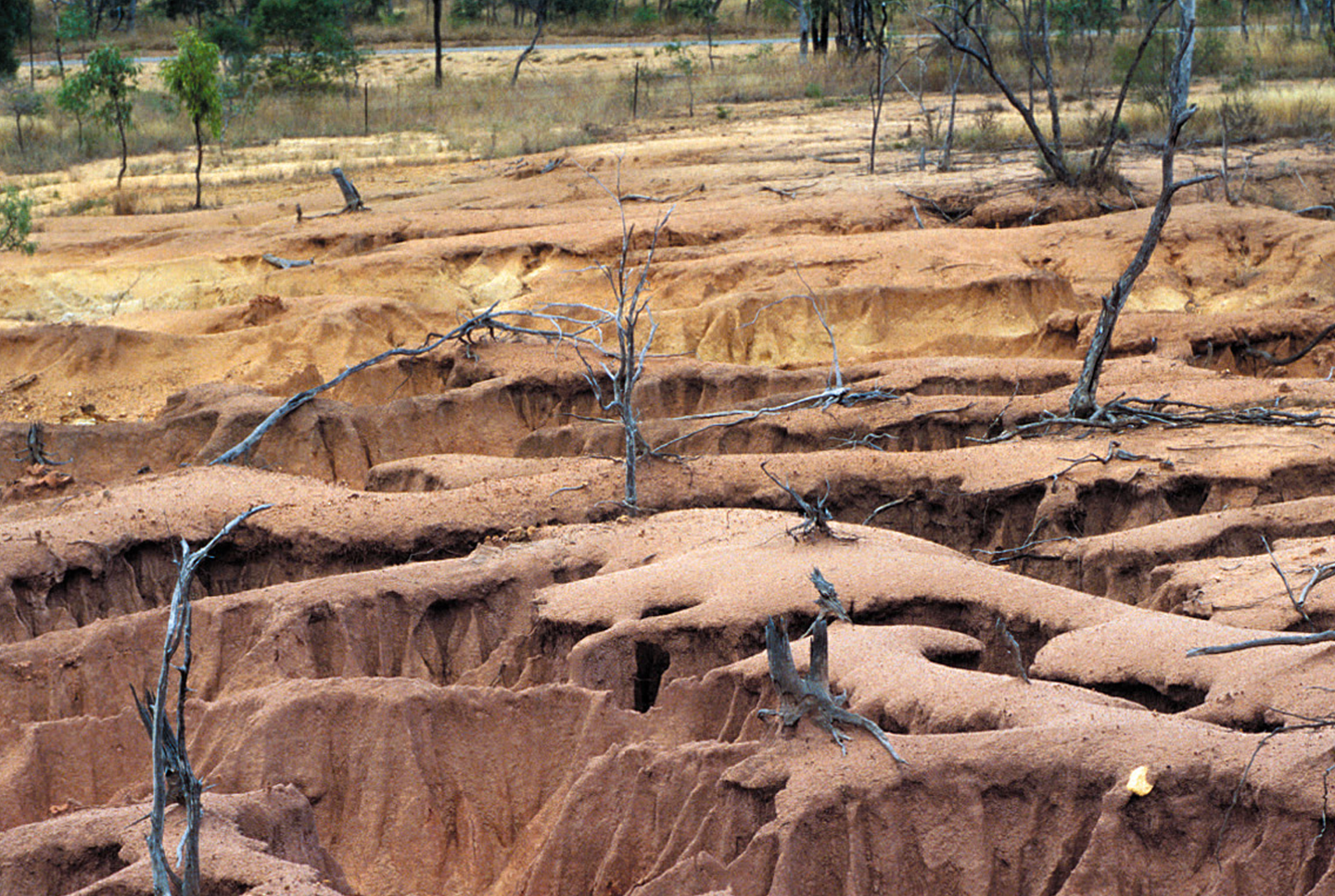
Environmental degradation due to dryland salinity, causing trees to die and inducing serious hillslope gully and sheet erosion at the base of a mesa landscape west of Charters Towers, Northern Queensland, Australia. (CREDIT: CSIRO, Wikimedia Commons)
For decades, we have heard many warnings about a global water crisis. However, a new UN-supported report states that these previous warnings do not capture the extent of the problem. Instead, the authors of this report state that the world has now moved from the crisis phase to a more severe phase called global water bankruptcy.
Kaveh Madani is the lead author of the report entitled Global Water Bankruptcy: Living Beyond Our Hydrological Means in the Post-Crisis Era, which was produced by The City College of New York and the UN University’s Institute for Water, Environment and Health, which is often referred to as the UN’s “think tank” for water issues. This report drew its conclusions from peer-reviewed literature in the journal Water Resources Management, as well as from an extensive worldwide dataset.
Most of the world’s population, around 75%, now lives in regions that are either insecure with respect to water supplies or are critically insecure. The report contends that the concept of water bankruptcy differs from temporary shortages in that it describes a long-term, permanent imbalance in water supply and demand, where humanity is consuming more water than can be produced naturally.
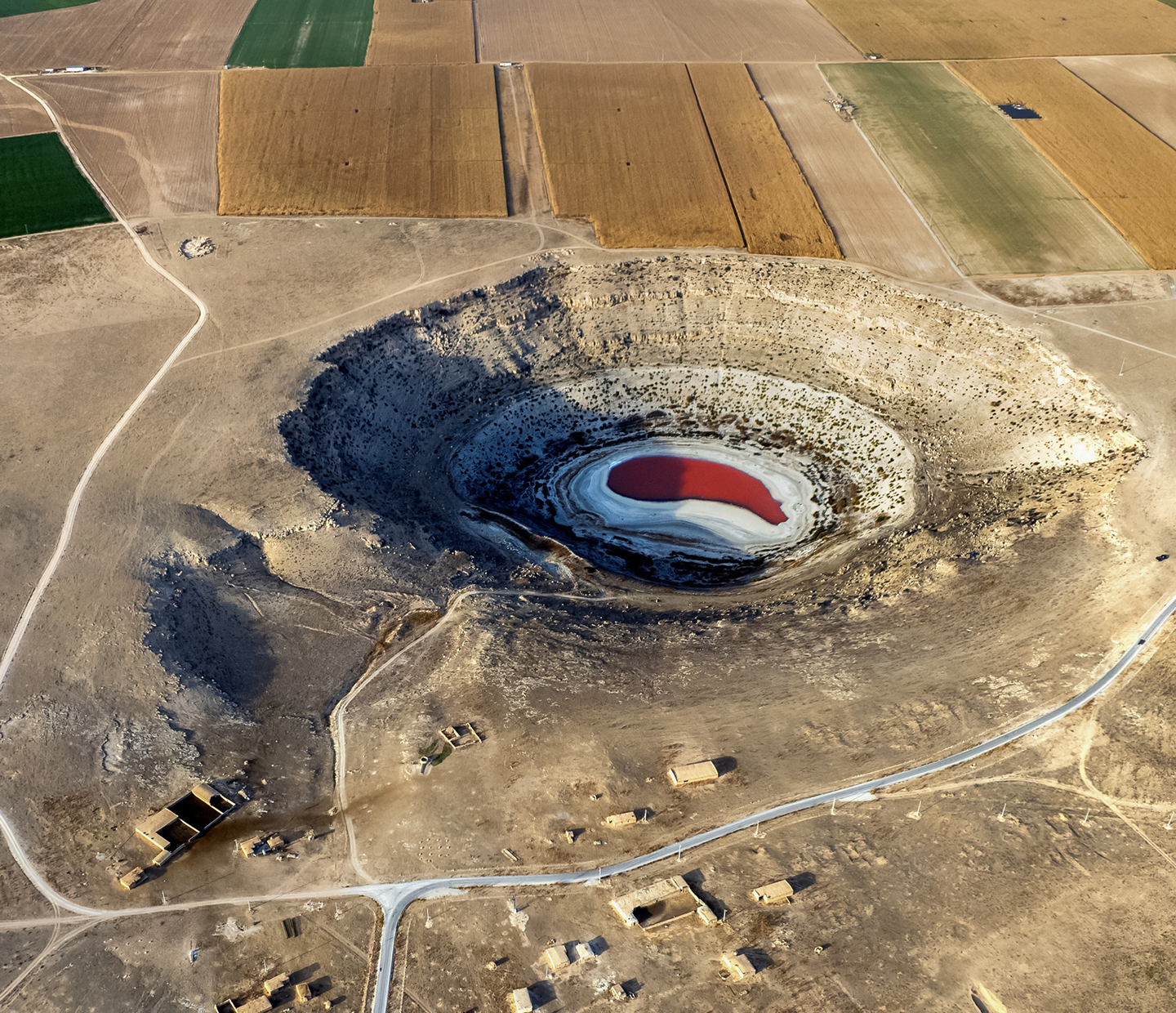
The Visible Face of Water Bankruptcy: This sinkhole in the Konya Plain, Türkiye, represents the literal collapse of the landscape under hydrologic liquidation. As of late 2025, nearly 700 such caverns scarred Türkiye’s agricultural heartland—a direct result of extracting groundwater much faster than nature can replenish it. (CREDIT: Ekrem07, Wikimedia Commons (October 2023))
When Nature’s Savings are Gone
In much the same way that a bank account or credit card provides a source of money for individuals to use, so too do rivers, snowpack, aquifers, wetlands, glaciers, and soil moisture. In addition to receiving annual “income” from rainfall and runoff, for many years societies have relied upon long-term sources of water savings.
Madani stated, “We can no longer consider water shortages to be temporary emergencies. When you consistently spend more than you earn in a financial sense, you become bankrupt.” “Our water checking and savings accounts have also been depleted.”
As shown in the report, these accounts now contain only about 30% of their original amounts. The glaciers that support billions of people have lost over 30% of their mass since 1970 and are becoming weaker.
Around 70% of the major aquifers throughout the world are now showing long-term declines due to excessive withdrawals. As these aquifers empty out, the land is sinking, in some cases by up to 25 centimeters (10 inches) annually.
In addition to these water towers, or buffers, many ecosystems have also been greatly reduced. Between 1970 and 2018, approximately 410 million hectares (1 billion acres) of wetlands were lost, an area equivalent to the European Union. Wetlands helped filter and clean wastewater, reduce flooding, and provide wildlife habitat. The economic value of the ecosystem services provided by wetlands is estimated to be worth over $5.1 trillion.
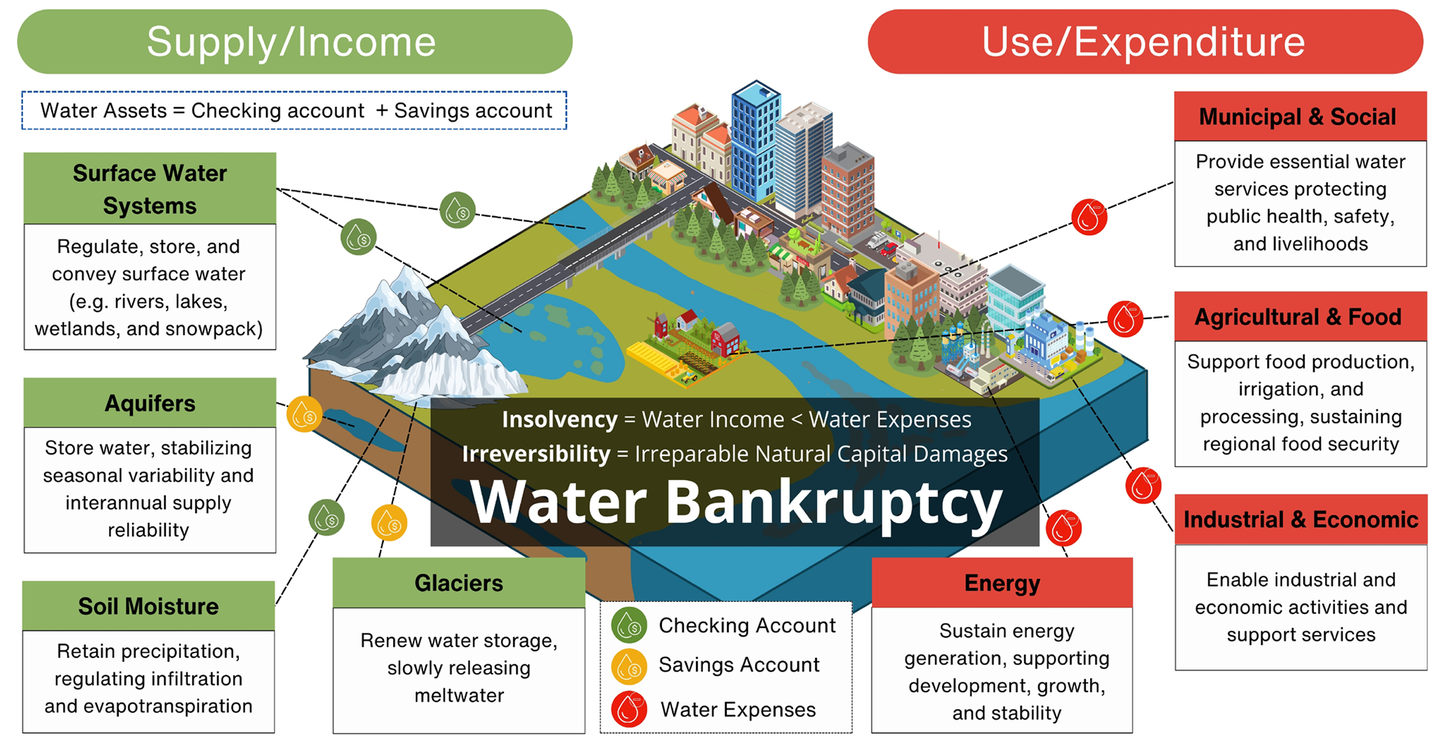
A simple illustration of water income and water expenses in a human–water system. (CREDIT: Global Water Bankruptcy)
Tags
Category: Social
- Water Resources
- Water Supply
- Reporting
- Water Resources Management
- New York, United States
- Water and Wastewater
- Water Accounting