China’s record-breaking Dashixia dam, built with the help of AI, starts storing water
Published on by Water Network Research, Official research team of The Water Network in Government
China’s record-breaking Dashixia dam, built with the help of AI, starts storing water
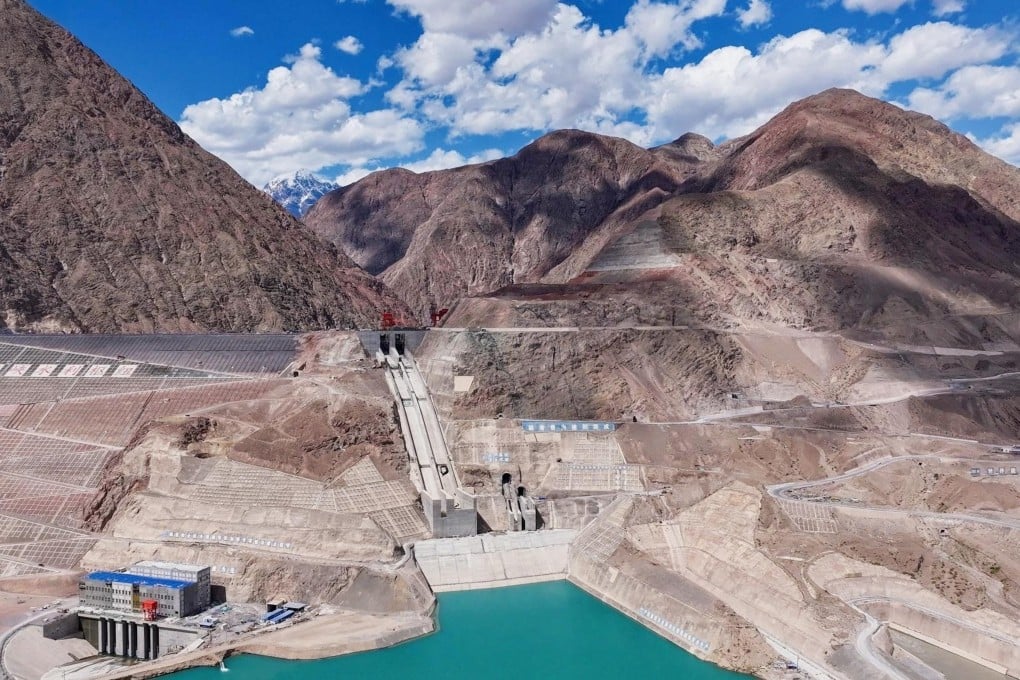
A record-breaking mega dam project in China’s far western Xinjiang region – built with the help of artificial intelligence and digital twin technologies – has begun storing water.
The Dashixia Water Control Project, located in the middle and lower reaches of the Kumarak River in Xinjiang’s Aksu prefecture, started to store water on Saturday.
Designed by the state-owned China Energy Engineering Corporation, it is the world’s tallest concrete-faced rockfill dam at a height of 247 metres (810 feet) – about the same as an 80-storey building, according to state media.
This type of dam consists of a large body of compacted rock or gravel material made watertight with a concrete slab on its upstream face. It has become the preferred dam design in the past few decades because it is considered safer, lower cost and suitable for taller structures.
The Dashixia project is also the world’s first dam of its kind to be completed using full-scale intelligent technology and construction, including the operation of unmanned equipment.
“The project utilised digital twin, AI and blockchain technologies to enable intelligent, 3D-printing-like construction to overcome seismic and geological challenges,” state broadcaster CGTN said in a report on Sunday.
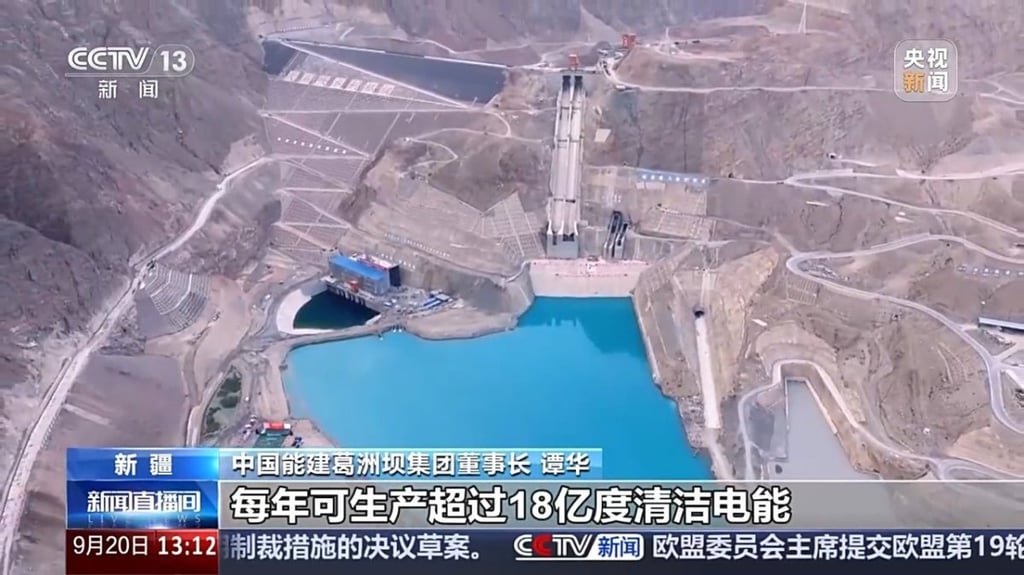
A range of intelligent technologies were used to design and build the Dashixia project. Photo: CCTV
When it is completed next year, the dam will have a reservoir capacity of 1.17 billion cubic metres, which will provide water to over 533,000 hectares of farmland in the Aksu River Basin and Tarim River Basin.
The dam is also expected to help with flood control measures and to reduce the occurrence of serious flood events.
With a total installed capacity of 750,000 kilowatts, it will also generate around 1.9 billion kilowatt-hours of electricity annually.
That is enough to power nearly 180,000 US households for a year, based on a per-household annual estimate of nearly 10,800 kilowatt-hours by the US Energy and Information Administration.
A range of intelligent technologies were used to design and build the dam, which allowed for it to be capped in December, eight months ahead of schedule, state-run China Daily reported on Sunday.
Taxonomy
- IT
- Energy
- Water Control
- Dams
- Intelligent Networks
- artificial intelligence
- China