Iran War Boosts Interest in Air-to-Water Technology
Published by Water Network Research, Official research team of The Water Network in Case Studies
Iran War Boosts Interest in Air-to-Water Technology
Startup Atoco now has a commercial prototype.
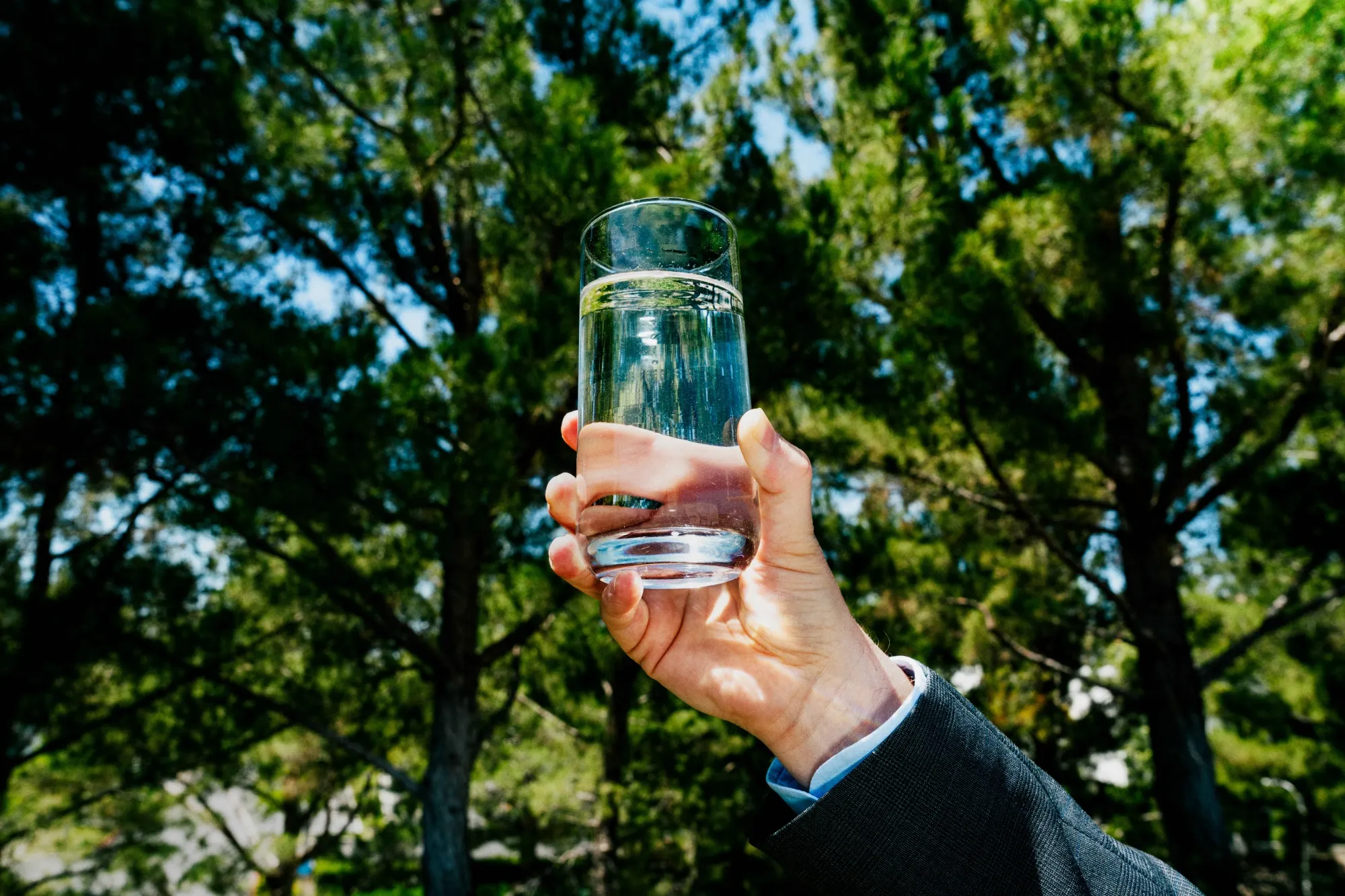
Drinkable water from the unit is held by an Atoco team member.Photographer: Ethan Noah Roy/Bloomberg
As water risks are exposed by the Iran War and AI data centers, startup Atoco is working on a device that can produce 4,000 liters daily by pulling it out of the air.
Tech for a drier planet
By Todd Woody
The large metallic white box sits in a Southern California parking lot, looking unremarkable until water starts flowing from a hose attached to it. Peer inside, though, and it’s nearly empty but for some wires, tubes and a container of light-colored material.
The water isn’t being conjured out of thin air by magic but by MOFs— metallic organic frameworks. MOFs are nanocrystalline structures engineered at an atomic level to attract specific molecules. In this case that’s H2O and the machine made by startup Atoco is silently harvesting molecules from the surrounding air and storing them in the material’s porous cavities that serve as microscopic water tanks.
Atoco founder Omar Yaghi shared the 2025 Nobel Prize in chemistry for pioneering MOFs and on an April morning he gave Bloomberg News an exclusive demonstration of the commercial prototype of its atmospheric water harvester in the lot outside the company’s Orange County laboratory.
In the wake of the Iran war, interest in the technology has risen as the giant desalination plants that supply water to tens of millions of people in the Middle East have become military targets. “There’s a new realization of the vulnerability and security risk of centralized water systems,” said Samer Taha, Atoco’s chief executive officer, who is based in Irvine, California.
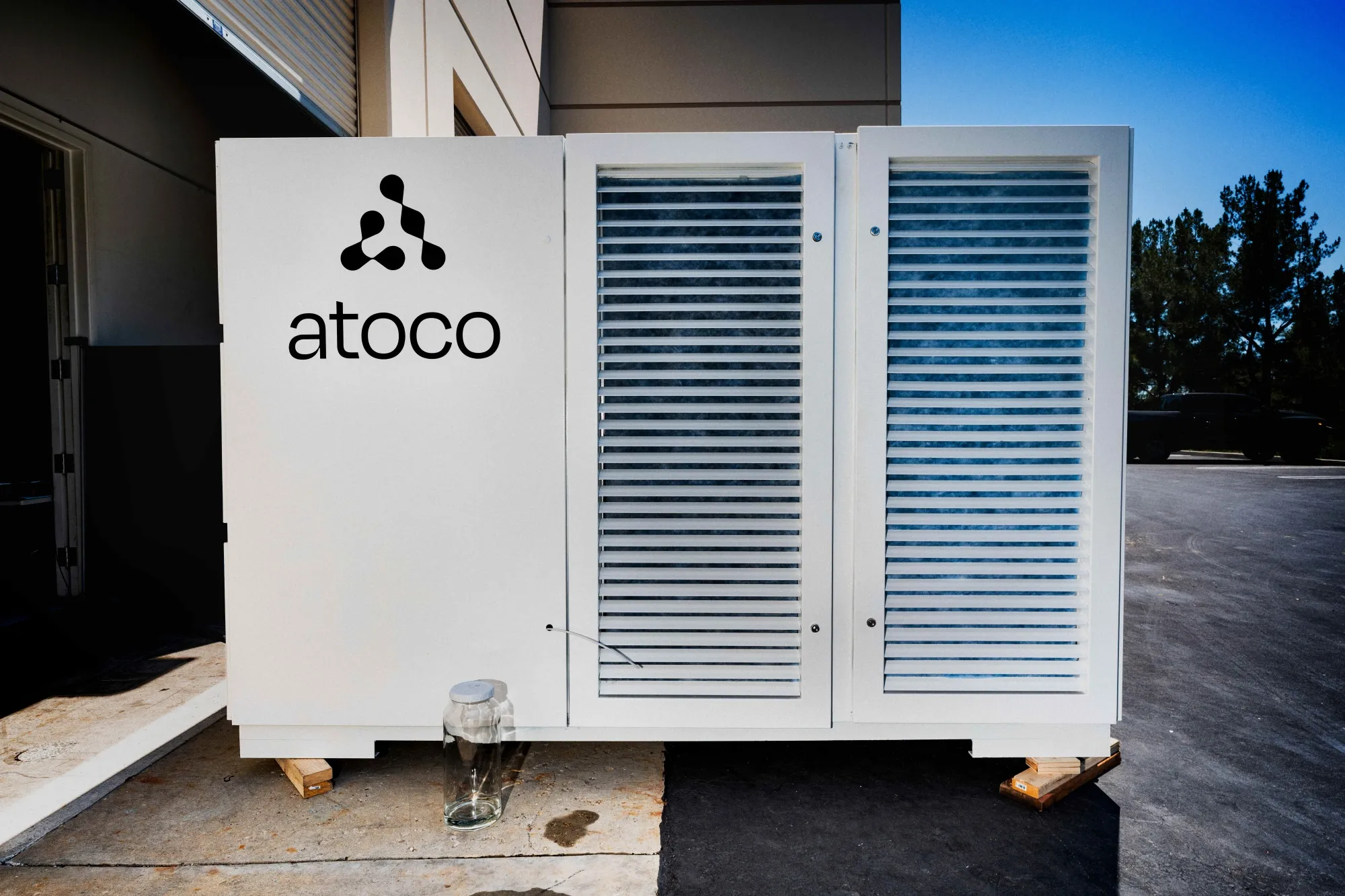
Atoco’s water harvester prototype.Photographer: Ethan Noah Roy/Bloomberg
Set to go into production later this year, the shipping container-sized machine will produce up to 4,000 liters (1,057 gallons) of water daily and can be installed at data centers, hospitals and other critical infrastructure. An off-the-grid model that operates on ambient sunlight and produces less water can be deployed to communities where water must now be trucked in.
“This becomes absolutely essential in alleviating the problems we are facing on our planet in terms of water scarcity,” said Yaghi, 61, a University of California at Berkeley chemistry professor who started Atoco in 2021.
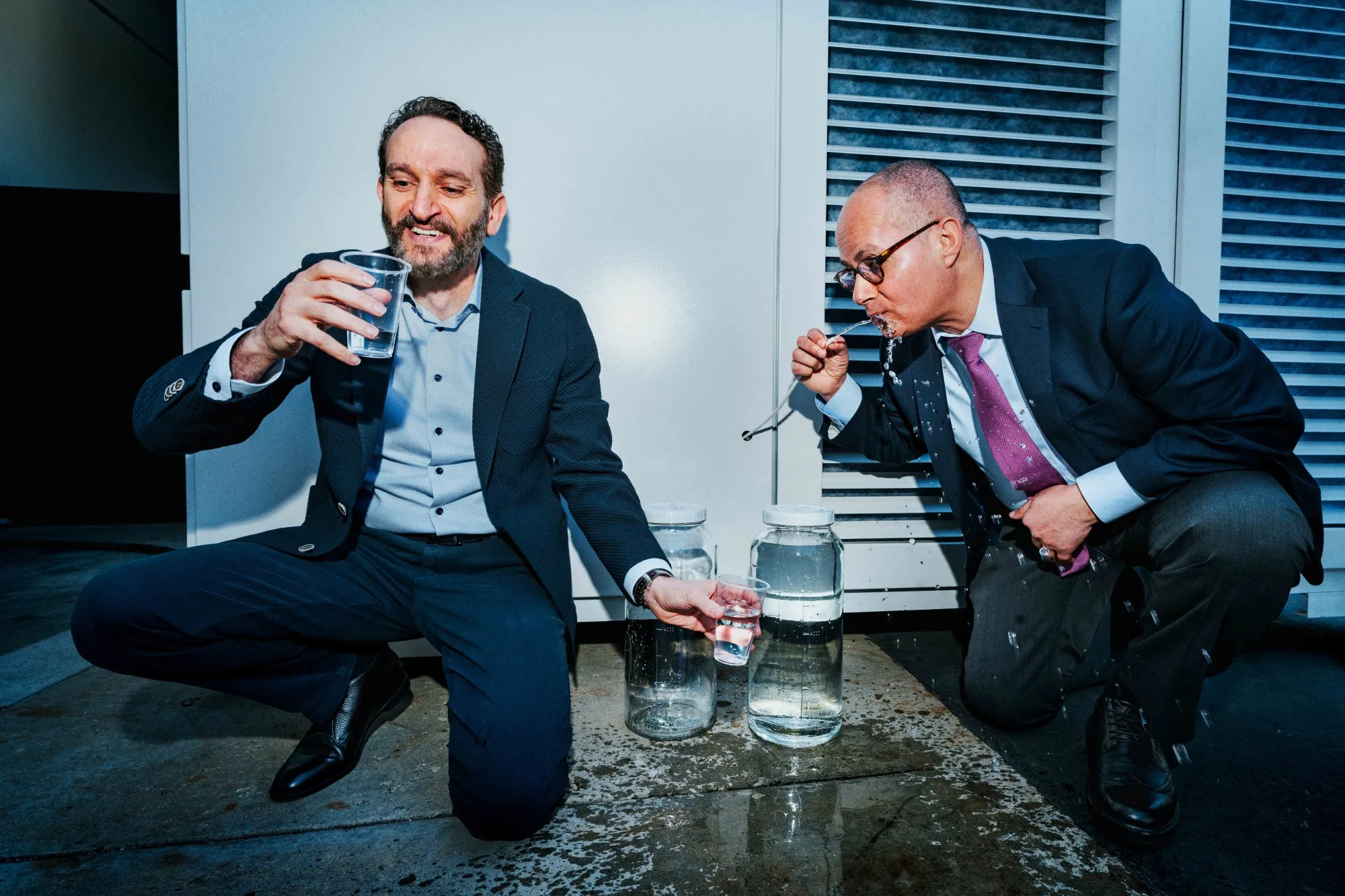
Atoco CEO Samer Taha, left, and Atoco founder Omar Yaghi drink from the company’s water harvester prototype.Photographer: Ethan Noah Roy/Bloomberg
Climate change is only intensifying those risks as drought and heat waves dry up rivers and reservoirs, with half the global population experiencing water shortages, according to the United Nations. In the US, Colorado River flows that supply water to 40 million people are declining dramatically amid record-low snowpack. Communities across the country are battling artificial intelligence data centers that threaten to drain already depleted aquifers while nearly a million Californians lack access to safe drinking water largely due to agricultural pollution. Some 500,000 people in Corpus Christi, Texas, face running out of water next year from a lack of rain.
Tags
Category: Case Studies
- Water Harvesting
- Technology
- Water Harvesting
- Produced Water
- Water Supply
- Water from Air
- Iran