Why Health Advisory is needed during an algal bloom episode
Published on by Water Network Research, Official research team of The Water Network in Social
A Health Advisory is not just a label; it is a decision tool. It tells the public when contact with a lake or reservoir may carry risk, and it tells managers what to verify first. In freshwaters, advisories often appear during harmful algal blooms (HABs), especially when cyanobacteria dominate warm, calm surface layers.
For practical guidance, consult the CDC’s harmful algal bloom resources; for operational context in source-water reservoirs, EPA’s cyanobacteria and cyanotoxins fact sheet (PDF) is a useful reference.
What a Health Advisory typically means at the shoreline
Most advisories are action-based: avoid swimming in scummy areas; do not swallow water; keep pets away from mats; rinse after accidental contact. For site teams, the same advisory usually means tighter sampling schedules, faster public updates, and a quick review of drivers such as temperature, wind, runoff, and stratification.
Green algae bloom: nuisance, warning sign, or both?
A green algae bloom can be unpleasant without being toxic, yet it still signals stress in the system. Dense biomass reduces clarity, increases organic load, and can intensify taste-and-odor pressure in reservoirs. Because cyanobacteria can resemble a green algae bloom early on, managers treat unknown blooms cautiously: document, sample, and communicate before people assume it is safe.
How to tell the difference between safe and toxic algae blooms?
You can recognize higher-risk conditions; you cannot confirm toxicity by sight alone. Thick scums pushed into downwind corners, a bright green ‘paint spill’ appearance, and strong musty odors often coincide with elevated risk, but confirmation still comes from sampling and lab analysis. NOAA explains what harmful algal blooms are; for freshwater research and monitoring context. A practical workflow is straightforward: use field observation plus sensor trends (chlorophyll, phycocyanin, temperature, dissolved oxygen) to guide where you sample; then publish decisions in plain language.
 Satellite view of a dense bloom in Lake Atitlán, Guatemala. Source: NASA Earth Observatory (image accessed via Wikimedia Commons).
Algae poisoning symptoms in humans: what to watch out for?
Algae poisoning symptoms in humans depend on exposure route and bloom conditions. Skin contact may cause irritation or rash; aerosol exposure can irritate the nose and throat; swallowing contaminated water can lead to nausea, vomiting, diarrhea, or headache. Most cases are mild; severe symptoms, dehydration, or breathing difficulty should be evaluated by a clinician. For a clinical overview, see the CDC page on freshwater HAB symptoms.
How long do blue-green algae symptoms last varies; toxin type, dose, and individual sensitivity all matter. Many mild effects resolve within 1–2 days; some last longer. Pets can become seriously ill quickly, especially if they lick algae from fur. The CDC notes that gastrointestinal symptoms can begin within hours and may last 1–2 days in some scenarios.
What is the role of oxygen in water quality?
Dissolved oxygen reflects system stability. As blooms build and later break down, decomposition consumes oxygen; low oxygen stresses fish and can promote nutrient release from sediments, which then supports new growth. Track oxygen alongside pigments and temperature; it helps explain why conditions persist, not only that they exist.
How to prevent red tide?
The phrase “red tide” is often used loosely to describe bloom events; in lakes and reservoirs, prevention is still built on fundamentals. Reduce nutrient pulses where possible; manage runoff; monitor intensively during warm, calm periods; respond early when pigments rise. Over time, fewer high-risk weeks means fewer advisories.
Easy installation and lower costs with ultrasound technology
Large water bodies need tools that fit day-to-day operations: practical deployment, measurable feedback, and minimal disruption. LG Sonic combines online monitoring with ultrasound-based control; teams track bloom pressure in real time and apply targeted frequencies to reduce bloom development without adding chemicals.
For an overview, visit LG Sonic’s technology page.
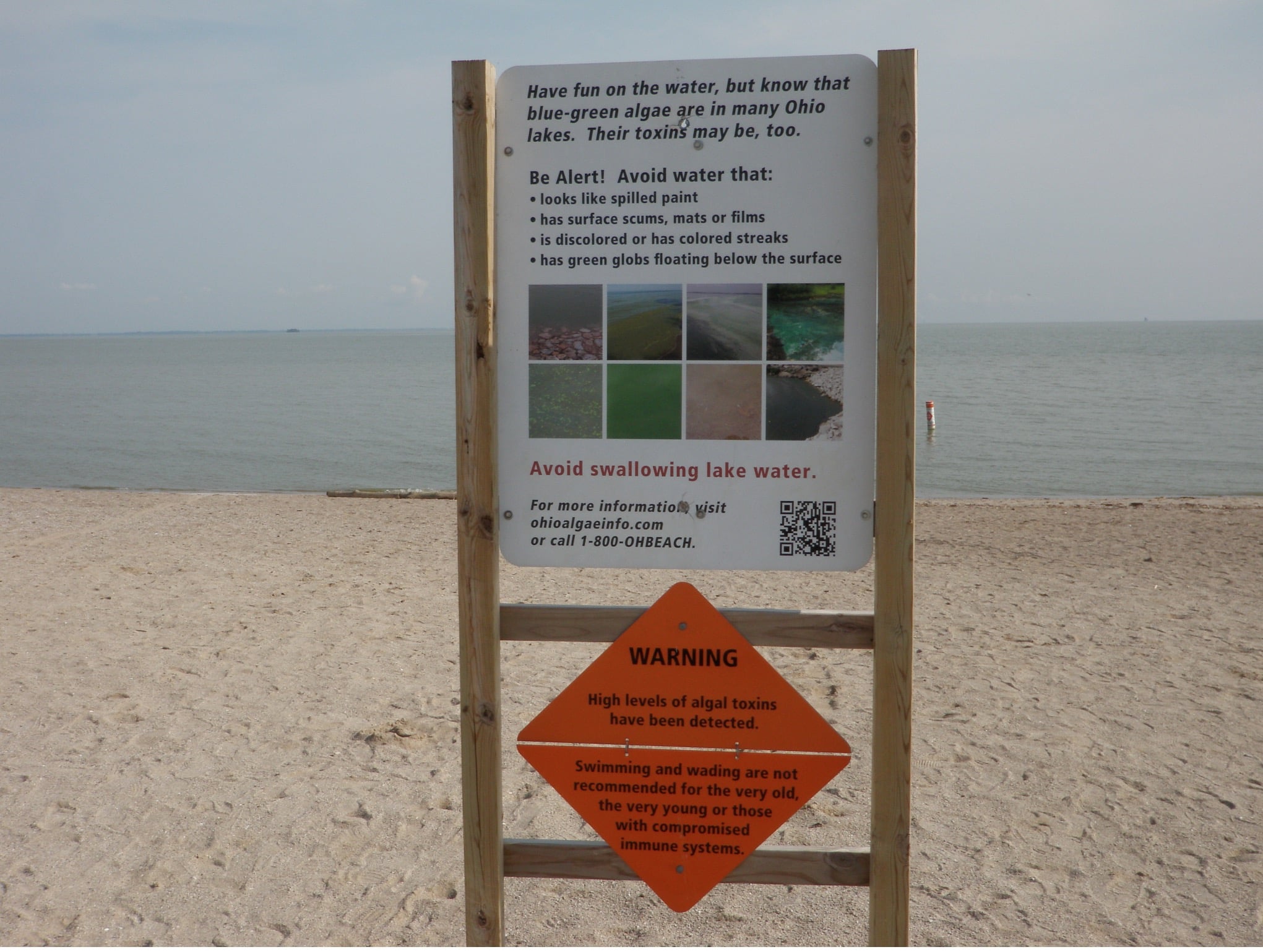 A public warning sign posted during bloom conditions at a lakeshore. Source: NOAA GLERL via Wikimedia Commons
.jpg)
Conclusion
A Health Advisory program works best when monitoring and communication move together: monitoring supports decisions; communication prevents exposure. Keep signage clear, place it where people enter the water, and update it quickly when conditions change.
- Keep pets away from shoreline scums; dogs often ingest algae while grooming.
- Avoid contact with floating mats; do not swallow water.
A Health Advisory protects the public in the short term; long-term success means fewer advisories. Reduce nutrient pressure, monitor bloom indicators, and act early when risk rises; then communicate clearly, and consistently, when conditions change.
Attached link
https://www.lgsonic.com/insights-health-advisory-what-it-means-during-harmful-algal-blooms-in-freshwaters/?utm_source=newsletter&utm_medium=email&utm_campaign=lgs17022026en&utm_source=ZohoMarketingHub&utm_campaign=LGS+Newsletter+17%2F02%2F2026+EN&utm_medium=emailTaxonomy
- IT
- Algae
- Health consequences from Toxic Water
- Biological Oxygen Demand (BOD)
- Algal Blooms
- Guatemala
- Condition Monitoring