Iota technology helps large water users uncover hidden leaks - Utility Magazine
Published by Water Network Research, Official research team of The Water Network for IOTA Services in Case Studies
Iota’s Flow Lotic and Footprint technologies are helping large water users detect leaks early, reduce waste and turn data into lasting water savings.
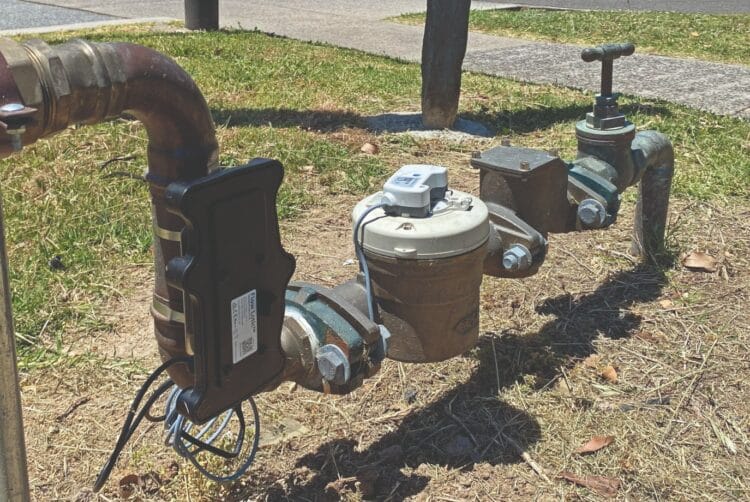
City of Casey is utilising Flow Lotic to detect and rectify leaks early. Image: Iota.
Unlocking the potential for big water users to become big water savers is a major opportunity for Australia’s water sector.
Many organisations with large, complex operations manage extensive internal water networks that span multiple buildings, assets and processes. For major manufacturers, councils, healthcare facilities, sporting precincts and other high-water-consumption industries, this complexity often makes it difficult to understand exactly where water is being used, or to detect when and where leaks may be occurring. Too often, water losses remain hidden until the next bill arrives, by which time millions of litres may already have been wasted.
“We’ve had cases where leaks have occurred for up to six months, generating hundreds of thousands of dollars in water costs. When mechanical meters are digitalised with our solutions, customers can be proactive in minimising cost and overall water consumption,” said Iota Customer and Marketing Director David Mason.
Recognising this challenge, Iota – the commercial arm of South East Water – works with large water users to provide greater visibility into how water moves through their networks. The goal is simple but powerful: give organisations the insight they need to manage water more efficiently, reduce losses and make informed decisions based on real data rather than estimates or assumptions. At the heart of this approach are Iota’s Flow Lotic and Footprint offerings, which together deliver a practical, scalable smart metering solution for commercial and industrial companies, large or small.

David Mason is Iota’s Customer Director. Image: Iota.
“Since the Millennium Drought in the 2000s in Australia, South East Water knew it had to develop a solution to reduce water demand overall. As other utilities became interested in the technology, Iota was established to share that innovation – and now others – with the broader Australian water industry. It would be a missed opportunity if technologies developed by a water authority to solve its own challenges weren’t shared across the sector so everyone could benefit,” Mason said.
Flow Lotic is an IoT data logger designed to transmit flow data from any pulse-enabled water meter. By deploying Flow Lotic devices at both main and sub-meter locations across a customer’s network, organisations can effectively digitalise their existing water infrastructure without the need for costly meter replacements. Near-real-time flow data provides the ability to create a detailed picture of how water is used across different parts of an operation. This level of granularity is particularly valuable for sites with multiple buildings or processes, where water use can vary significantly throughout the day and night and across different sections of operations.
“Flow Lotic can be set up wherever there’s a mechanical meter, which is either owned by a water authority, commercial customer, industrial water user or council. Increasingly we’re seeing customers using sub-meters within their local water network, which, when combined with Flow Lotic, allows them to build a hierarchy within the platform. With the main meter separate from the sub-meters, they can pinpoint where any leaks might be,” said Mason.
“Flow Lotic lasts up to five years in the field, so it’s a very cost-effective solution.”
The real strength of Flow Lotic emerges when it is paired with Footprint, Iota’s smart metering platform that simplifies data management. Through an intuitive, easy-to-use portal, Footprint allows customers to visualise and analyse flow data from both main and sub-meters. Water consumption can be monitored daily, monthly and annually, revealing trends, excessive flows and unexpected anomalies that might otherwise go unnoticed. By presenting data in a clear and actionable way, Footprint empowers organisations to move from reactive responses to proactive water management.
“The great thing about Footprint is that it doesn’t just show you data; it helps you act on it. It gives users the control to define what ‘normal’ looks like for them, then flags exceptions in near-real-time,” Mason said.
Together, Flow Lotic and Footprint enable customers to track usage across all sites, pinpoint irregularities and identify leaks early. This has already delivered tangible results for a range of commercial customers. City of Casey, for example, has achieved significant savings from detecting and rectifying leaks within weeks rather than months.
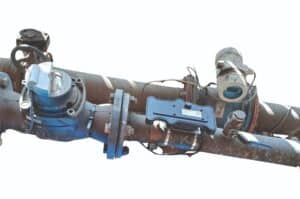
Water networks can be digitalised by connecting Flow Lotic to main and sub mechanical meters. Image: Iota.
“We had a pipe burst at the back of a building with no easy access, leaking at 30 litres a minute. It was fixed the next day, but with no one entering that area, it could have run for a long time before anyone noticed,” said City of Casey CEO Glenn Patterson.
“We also discovered a garden drip irrigation system running through winter. Because the lines were underground, no one realised it was on.”
Patterson said even small leaks can quickly escalate into major costs.
“A leak of 10 litres a minute could cost close to $7000 over a billing period, but if we identify and fix it within a week it’s less than $500. When leaks are underground or out of sight, they can run far longer before they’re detected,” he said.
He believes the investment in smart metering is a “no-brainer”, particularly for councils managing large networks of water meters.
Tags
Category: Case Studies
- Water Footprint
- Water Footprint Research
- IT
- Water Meter Coupling Gaskets
- pipeline leak detection
- Leak Detection and Inspection
- Australia