A Small Watershed’s Great Big Lesson for All of Us
Published by Water Network Research, Official research team of The Water Network for Stroud Water Research Center in Case Studies
From Forest to Conestoga
A Small Watershed’s Big Lesson in Restoration, Resilience, and Shared Stewardship

Hope Springs
One summer day, while walking along the stream that runs through his farm, Curvin Shirk spotted something he’d never seen before. Could it be? He dug around the bank, and sure enough, there it was: water emerging from the earth, flowing down toward the stream. The spring’s pulse was steady and strong. The water, cool. After Curvin cleared away some of the sediment, watercress (an aquatic edible plant) soon began growing around it.
Curvin was excited. The trees he’d planted were doing their job, cooling the stream with sprinkled shade and providing a healthy dose of leaf litter. And now this. The spring had likely been there all along, but not until the livestock were fenced out and the forest buffer planted could this muddy patch reveal its true form.
The transformation happened neither by accident nor overnight nor at the hands of one person. Decades in the making, it’s the result of one community’s grand plan to restore its land and water.
Curvin is one of seven landowners along the unnamed tributary that joins their properties. They’re friends and neighbors. Most are members of the Plain community. And together, with help from conservation partners, they’ve created an unbroken stretch of forest buffer that connects the forested hills to Little Conestoga Creek in Lancaster County, Pennsylvania.
Without even a name, it’s an unassuming little stream. But it’s got a great big story.
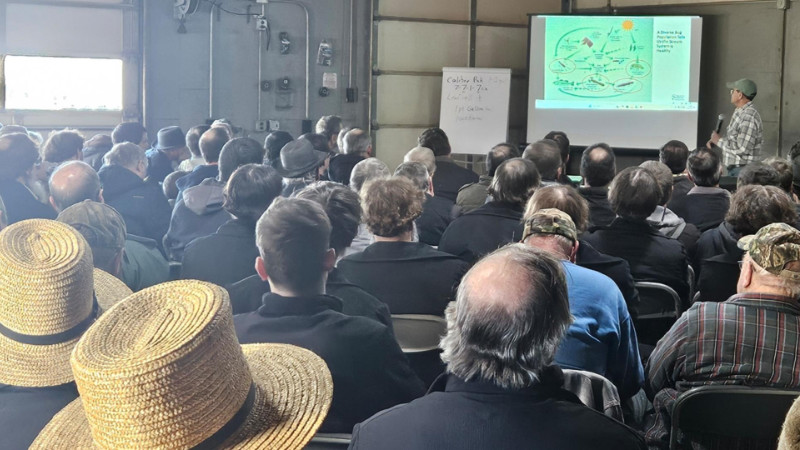
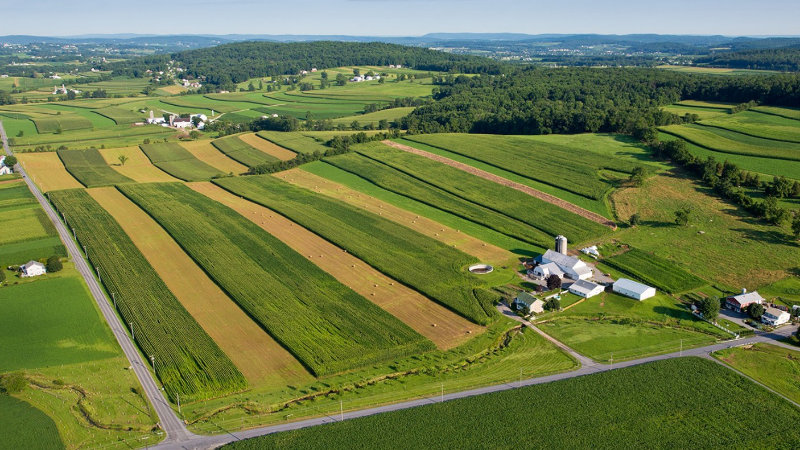
Left: Lamonte Garber, watershed restoration coordinator, speaks to farmers. Photo: Greg Heigel . Right: Hammertown Run flows through farmland. Photo: Lancaster County Conservation District
Changing Fate
Curvin’s stream connects a watershed, nicknamed Hammertown (after a nearby road), that stretches a mere 1.5 square miles. Any pollution here might seem like a drop in the river it eventually flows into. But the drops add up across Pennsylvania’s headwater streams, which account for 80% of the state’s stream miles. Across the United States, the picture is similar: Most U.S. streams are headwater streams. And so, the fate of American rivers and their wildlife begins here in this Lancaster County stream and in thousands of others like it.
Forty or so years ago, Hammertown’s fate started to change, as conservation groups cultivated relationships with some of the farmers. The Natural Resources Conservation Service (NRCS) was the first to reach out, offering free well-water testing. As the farmers got to know conservation workers, like Greg Heigel from the Lancaster County Conservation District and Ashley Spotts from the Chesapeake Bay Foundation (CBF), trust and friendship grew. One farmer, Raymond King, even invited Heigel and Spotts to join the preparations for his daughter’s Amish wedding.
That early work laid the foundation for NRCS, CBF, the conservation district, and Stroud Water Research Center to help the watershed’s landowners and farmers protect their soil and restore their stream. The first trees were planted in 2009 on Benuel Zook’s farm. Fifteen years later, the unbroken stretch of buffer was finally complete. Some trees came via the U.S. Department of Agriculture’s Conservation Reserve Enhancement Program. Some, via CBF’s Keystone 10 Million Trees Partnership. And some, via the Stroud Center’s Farm Stewardship Program.
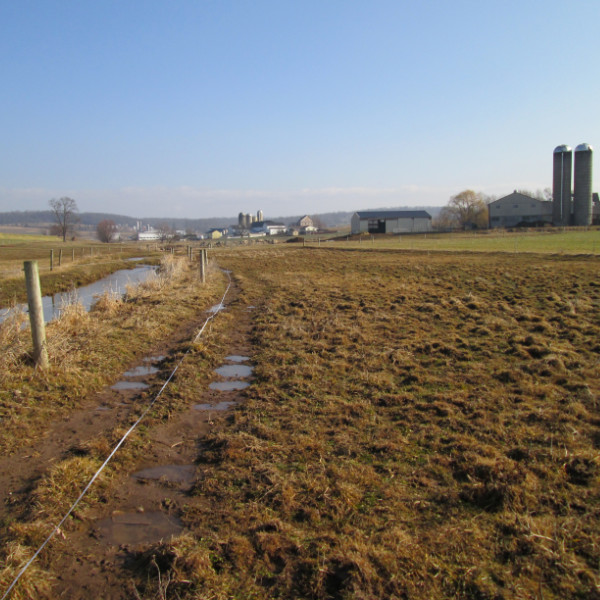
Before
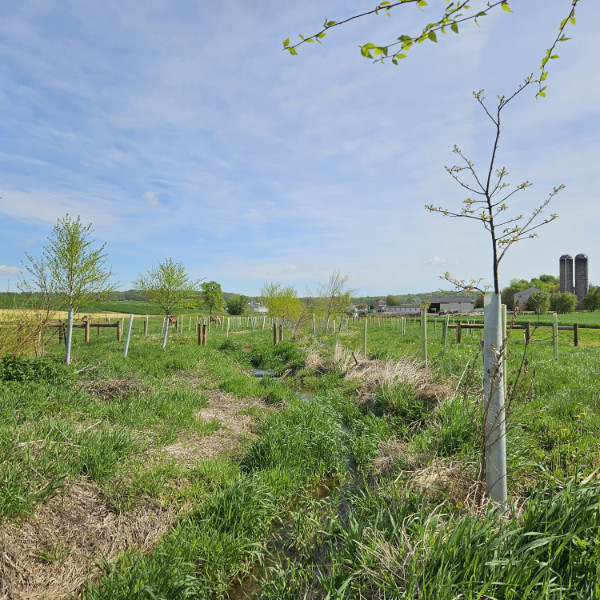
After
Two thousand trees across 13 acres make up this forested corridor that cools and feeds the stream, adds vital habitat, stabilizes streambanks, and reduces runoff. It makes the stream more resilient to a changing climate, pollution, flooding, and drought.
The scale of the buffer in such a small watershed is significant and so are the other improvements that make up the restoration effort: Manure and fertilizer management, livestock fencing, and soil conservation practices reduce land-use pressures on the stream.
“All of us who grew up in Lancaster got used to brown, muddy streams. If you wanted to see cleaner water, you went north,” says Matt Ehrhart, director of watershed restoration at the Stroud Center. “This idea that if we do it right, we can have productive, economically viable farms growing food and also have wild trout in our streams is just such a huge deal, but it’s not possible without a lot of work.”
Doing it right means following the science of what works to restore freshwater ecosystems and clean water, and that requires aggregation and partnership.
Understanding Water
Stream degradation is often the result of multiple pressures: Chemical and thermal pollution, stormwater runoff, erosion, deforestation, physical disturbance, and climate change are all common culprits. It makes sense, then, that removing only one or two in isolated parcels of land will yield disappointing results. In recent decades, states like Pennsylvania have tried and failed to remove more streams from impairment lists than they add — lists that tell us which streams aren’t healthy enough for fishing, swimming, and drinking. Why the struggle?
Stroud Center scientists and restoration experts argue progress has languished because of too much investment in strategies that don‘t restore functional stream ecosystems (reengineering of channels and floodplains) and not enough investment in ones that do (changing how people use their land and water).
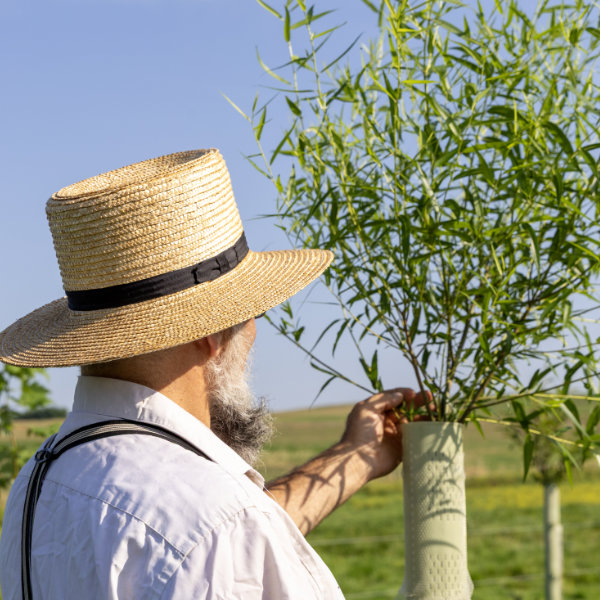
David Smucker cares for the trees on his property. Photo: Jennifer Foster
Hammertown is an investment in the latter. An intensive array of practices aimed at reducing runoff and physical disturbance, producing ecological uplift, and restoring natural stream function combine across an entire watershed — though small it may be — to make a big impact: conditions that, in time, allow the stream to heal itself.
Tags
Category: Case Studies
- Research
- IT
- Restoration
- Conservation
- Water Conservation
- Stream Restoration
- United States