Zankore’s AI Factory: Can Central Java afford the water cost?Indosat Ooredoo Hutchison, together with Ooredoo Group, Nokia and NVIDIA, plans t...
Published by Water Network Research, Official research team of The Water Network
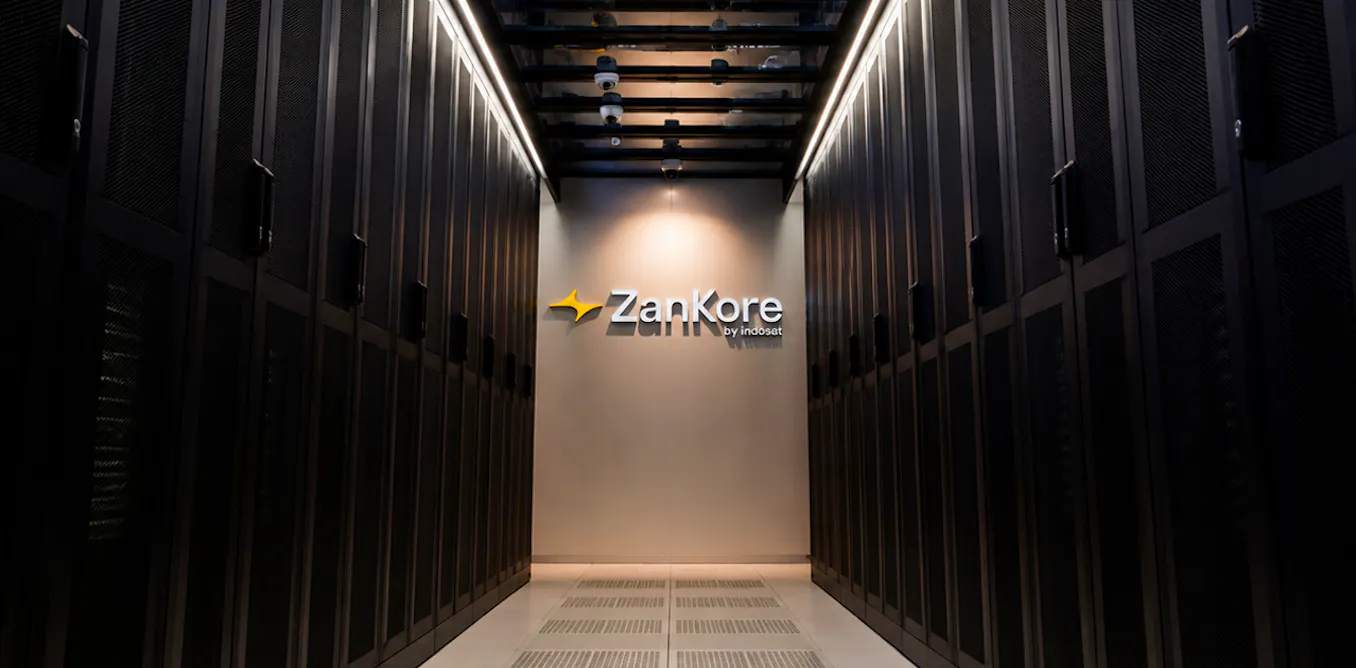
Zankore’s AI Factory: Can Central Java afford the water cost?
Indosat Ooredoo Hutchison, together with Ooredoo Group, Nokia and NVIDIA, plans to develop Zankore, an artificial intelligence (AI) infrastructure platform aimed at serving the region.
The 1-gigawatt (GW) AI Factory will be built in stages. Its first phase, with a capacity of about 200 megawatts (MW), is scheduled to begin construction in Batang, Central Java, in the first half of 2027.
The project is being promoted as a step toward Indonesia’s ambition to become a regional AI hub. But advanced AI infrastructure requires not only enormous amounts of electricity. Its servers also need large volumes of water for cooling.
The difficult question is whether the government can guarantee enough water for both AI servers and local communities when Central Java is already facing water stress.
A potentially massive water demand
Every time we ask a chatbot a question, thousands of chips in data centers process the request and generate heat. Cooling systems must continuously remove that heat, often by evaporating water through cooling towers.
Water is also consumed indirectly along the data center supply chain, including in electricity generation.
Europe Newsletter | Inline | A weekly email for Europeans
Please enter your email...
Get free newsletter
This site is protected by reCAPTCHA and the Google Privacy Policy and Terms of Service apply.
A 2025 study by University of California researchers estimated potential water demand from AI factories using Microsoft’s projected approach. Indonesia recorded the highest projected cooling-water consumption among the countries examined, at about 1.9 liters for every kilowatt-hour of electricity used by servers.
Based on those projections, Zankore’s 200-MW first phase could evaporate between 4.8 million and 9.1 million liters of water per day, assuming continuous operation.
At that rate, Zankore could consume an amount equivalent to the 75.46 million liters of clean water prepared by the Central Java government during the 2026 drought crisis in just eight to 16 days. At the full 1-GW capacity, the same volume could be consumed in roughly two to three days.
Tags
- Policy
- Intelligent Networks
- California, United States
- artificial intelligence
- Construction of Water Projects
- artificial neural network
- Domestic Water Use