SewerAI Wins Backing to Tackle Trillion Dollar Infrastructure Gap SewerAI Wins Backing to Tackle Trillion Dollar Infrastructure GapA funding rou...
Published by Water Network Research, Official research team of The Water Network
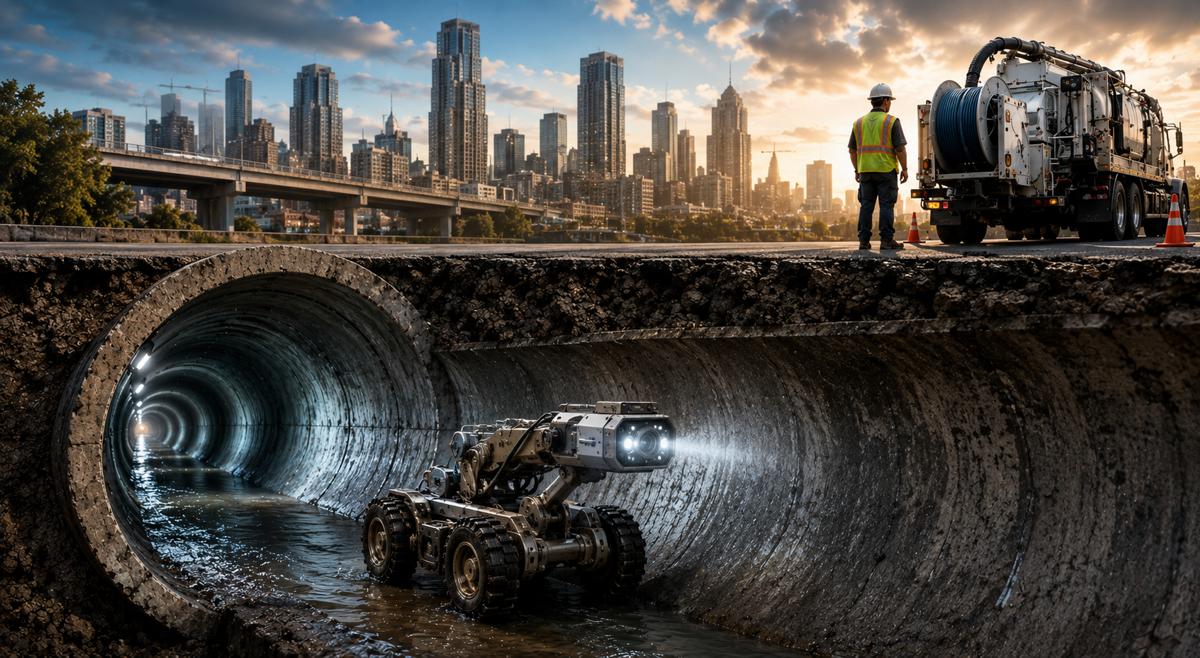
SewerAI Wins Backing to Tackle Trillion Dollar Infrastructure Gap SewerAI Wins Backing to Tackle Trillion Dollar Infrastructure Gap
A funding round that closed in early June has thrown a spotlight on one of the least glamorous corners of the built environment, the pipes nobody thinks about until something goes badly wrong. SewerAI, a Walnut Creek software firm that uses artificial intelligence to read and interpret sewer inspection footage, has secured a major strategic investment led by JMI Equity, the growth-equity investor with offices in San Diego, Washington and Baltimore. Existing backers Innovius Capital, Epic Ventures and Bentley Systems all came back for another bite, and the parties chose not to disclose the size of the cheque.
The timing wasn’t accidental. The National League of Cities’ 2026 Municipal Infrastructure Conditions Report found that water and sewer assets have slid further in condition than any other major category since 2022, even though local governments keep ranking them near the top of their capital priorities. That widening gap, between what’s quietly crumbling underground and what cities can realistically afford to inspect and repair, is exactly the territory SewerAI is trying to claim.
Briefing
SewerAI raised a strategic round led by JMI Equity on 2 June 2026, with Innovius Capital, Epic Ventures and Bentley Systems all returning; financial terms weren’t disclosed.
The platform now supports data from more than 2,000 cities, manages over 30,000 miles of pipe, and has completed upwards of 850,000 NASSCO surveys through its AutoCode engine.
Customers include Houston, the largest sewer collection utility in the United States, alongside Phoenix, KC Water and engineering firms such as HDR and PURIS.
The raise lands as the EPA pegs national clean-water infrastructure needs at roughly $630 billion over two decades, part of a wider deficit that tops $1.2 trillion once drinking water is added in.
SewerAI’s roadmap pushes AI beyond inspection into rehabilitation planning, with deeper ties to Esri ArcGIS, Trimble and OpenGov on the way.
A Trillion Dollar Hole Beneath The Streets
The numbers behind all this are sobering. The US Environmental Protection Agency’s most recent Clean Watersheds Needs Survey put the bill for wastewater and stormwater systems at about $630 billion over the next 20 years, a 73 per cent jump on the figure recorded a decade earlier. Fold in the parallel survey covering drinking water, and the combined shortfall comes to more than $1.2 trillion, according to analysis by The Pew Charitable Trusts. The 2021 federal infrastructure law sent roughly $50 billion towards water, with around $13 billion earmarked for wastewater and stormwater, which is real money but nowhere near enough to close the hole.
That’s the backdrop SewerAI is selling into, and it explains why investors keep circling. Most of the work of keeping sewers functional, inspecting them, grading the defects, deciding what to fix first, has historically been slow, manual, expensive and easy to get wrong. Crews push a camera through a pipe, a technician watches the footage and codes the faults by hand, and the results often sit in a folder somewhere until the next crisis.
With skilled inspectors in short supply and capital budgets stretched thin, anything that speeds up that grind without sacrificing accuracy has obvious appeal to the people who actually have to keep the taps running and the bayous clean.
From Camera Footage To Capital Plans
At the heart of SewerAI’s pitch is a platform it calls PIONEER, which strings together field capture, cloud-based data management and AI-assisted coding into a single chain that runs from the manhole to the master plan. Its AutoCode engine handles the painstaking job of classifying pipe defects against NASSCO standards, the industry’s widely used framework for grading the condition of underground assets from CCTV video. Where a human inspector might labour over hours of footage, the software flags cracks, roots, blockages and structural faults automatically, then hands the technician a draft to review rather than a blank screen.
The scale claimed is not trivial. SewerAI says it processes millions of feet of underground data through its workflows every month and has built what it describes as the largest infrastructure inspection dataset in the sector, an asset that tends to make AI models sharper the more they’re fed.
Beyond inspection, the company has been layering on planning tools, including a Smart Project Builder and a Risk & Rehab capability that scores assets and helps utilities decide which rehabilitation projects deserve scarce capital first. That shift, from storing inspection records to actively shaping spending decisions, is the part the new money is meant to accelerate, and it’s where the commercial upside sits.
A funding round that closed in early June has thrown a spotlight on one of the least glamorous corners of the built environment, the pipes nobody thinks about until something goes badly wrong. SewerAI, a Walnut Creek software firm that uses artificial intelligence to read and interpret sewer inspection footage, has secured a major strategic investment led by JMI Equity, the growth-equity investor with offices in San Diego, Washington and Baltimore. Existing backers Innovius Capital, Epic Ventures and Bentley Systems all came back for another bite, and the parties chose not to disclose the size of the cheque.
The timing wasn’t accidental. The National League of Cities’ 2026 Municipal Infrastructure Conditions Report found that water and sewer assets have slid further in condition than any other major category since 2022, even though local governments keep ranking them near the top of their capital priorities. That widening gap, between what’s quietly crumbling underground and what cities can realistically afford to inspect and repair, is exactly the territory SewerAI is trying to claim.
Briefing
SewerAI raised a strategic round led by JMI Equity on 2 June 2026, with Innovius Capital, Epic Ventures and Bentley Systems all returning; financial terms weren’t disclosed.
The platform now supports data from more than 2,000 cities, manages over 30,000 miles of pipe, and has completed upwards of 850,000 NASSCO surveys through its AutoCode engine.
Customers include Houston, the largest sewer collection utility in the United States, alongside Phoenix, KC Water and engineering firms such as HDR and PURIS.
The raise lands as the EPA pegs national clean-water infrastructure needs at roughly $630 billion over two decades, part of a wider deficit that tops $1.2 trillion once drinking water is added in.
SewerAI’s roadmap pushes AI beyond inspection into rehabilitation planning, with deeper ties to Esri ArcGIS, Trimble and OpenGov on the way.
A Trillion Dollar Hole Beneath The Streets
The numbers behind all this are sobering. The US Environmental Protection Agency’s most recent Clean Watersheds Needs Survey put the bill for wastewater and stormwater systems at about $630 billion over the next 20 years, a 73 per cent jump on the figure recorded a decade earlier. Fold in the parallel survey covering drinking water, and the combined shortfall comes to more than $1.2 trillion, according to analysis by The Pew Charitable Trusts. The 2021 federal infrastructure law sent roughly $50 billion towards water, with around $13 billion earmarked for wastewater and stormwater, which is real money but nowhere near enough to close the hole.
That’s the backdrop SewerAI is selling into, and it explains why investors keep circling. Most of the work of keeping sewers functional, inspecting them, grading the defects, deciding what to fix first, has historically been slow, manual, expensive and easy to get wrong. Crews push a camera through a pipe, a technician watches the footage and codes the faults by hand, and the results often sit in a folder somewhere until the next crisis.
With skilled inspectors in short supply and capital budgets stretched thin, anything that speeds up that grind without sacrificing accuracy has obvious appeal to the people who actually have to keep the taps running and the bayous clean.
From Camera Footage To Capital Plans
At the heart of SewerAI’s pitch is a platform it calls PIONEER, which strings together field capture, cloud-based data management and AI-assisted coding into a single chain that runs from the manhole to the master plan. Its AutoCode engine handles the painstaking job of classifying pipe defects against NASSCO standards, the industry’s widely used framework for grading the condition of underground assets from CCTV video. Where a human inspector might labour over hours of footage, the software flags cracks, roots, blockages and structural faults automatically, then hands the technician a draft to review rather than a blank screen.
The scale claimed is not trivial. SewerAI says it processes millions of feet of underground data through its workflows every month and has built what it describes as the largest infrastructure inspection dataset in the sector, an asset that tends to make AI models sharper the more they’re fed.
Beyond inspection, the company has been layering on planning tools, including a Smart Project Builder and a Risk & Rehab capability that scores assets and helps utilities decide which rehabilitation projects deserve scarce capital first. That shift, from storing inspection records to actively shaping spending decisions, is the part the new money is meant to accelerate, and it’s where the commercial upside sits.
Tags
- Inspection technology
- IT
- Inspection
- Infrastructure
- artificial intelligence
- asset investment planning
- United States