The False Promise of Turning Poop Into FuelBiodigesters have been hailed as a climate-friendly way to reduce agricultural emissions and provide ...
Published by Water Network Research, Official research team of The Water Network
The False Promise of Turning Poop Into Fuel
Biodigesters have been hailed as a climate-friendly way to reduce agricultural emissions and provide income for rural communities. Instead, advocates say, they’re polluting local air and waterways.
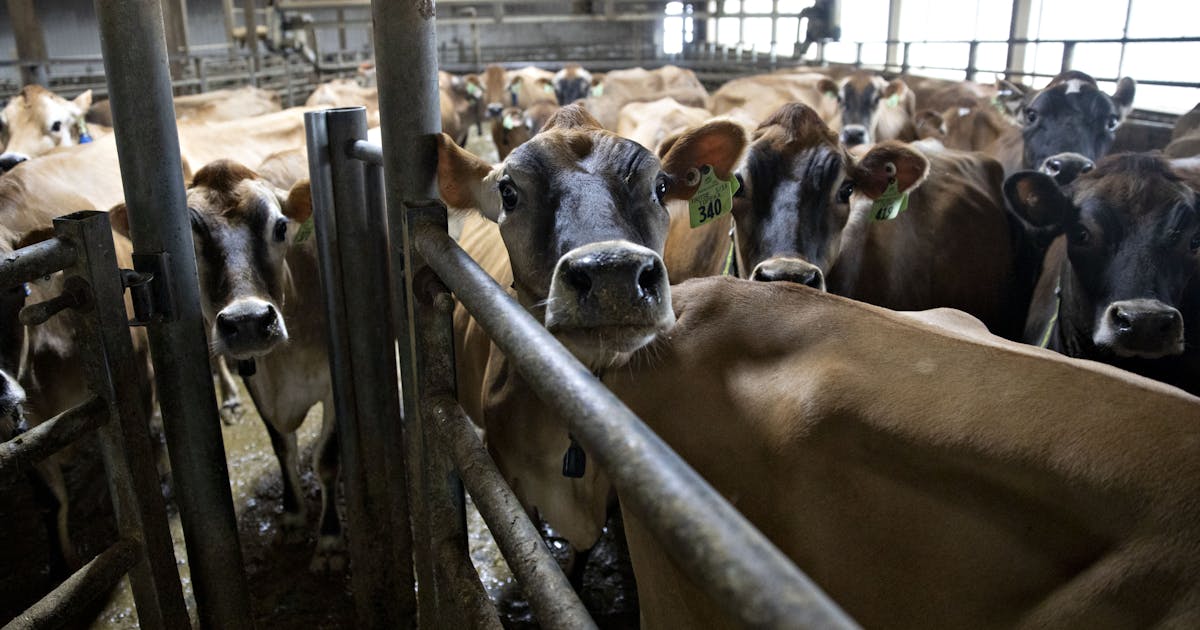
Cows stand in a metal pen under a roof, with one particular cow craning her head forward to look at the camera.
Daniel Acker/Bloomberg/Getty Images
Dairy cows stand in a pen at a Wisconsin farm in 2020.
In much of rural Wisconsin, manure is everywhere. It’s in the ground, the drinking water, and the air communities breathe. The state is home to more than 300 Concentrated Animal Feeding Operations (CAFOs) that produce billions of pounds of manure every year.
Kim Dupre, a clean water advocate who lived in St. Croix County, Wisconsin, for 20 years, has watched the state go from an idyllic agricultural haven to a barren region dominated by factory farms and their waste. Schools and local businesses have closed, and the state’s growing public health crisis has been linked to a lack of access to clean drinking water in rural areas. “It doesn’t feel like country living. You feel like you’re in an industrial park,” Dupre said.
Big Ag took hold of the Midwest decades ago. And some of these trends—shrinking populations, farm consolidation, and local business closures—are common in rural areas across the country. But some residents and activists say a recent, allegedly pro-environmental policy is making things worse: A climate program implemented some two thousand miles away is encouraging farms in Wisconsin to turn manure into fuel using anaerobic digesters. The pollution problem is growing.
The California Low-Carbon Fuel Standard (LCFS) is a climate program implemented in 2011 to incentivize the production of alternative fuels and reduce greenhouse gas emissions in the state. It’s a key part of California’s climate strategy, and has issued more than 22 billion dollars’ worth of credits for low-carbon fuels since 2013. One of the “low-carbon” fuels heavily incentivized by the LCFS is factory-farm biogas, a fuel source produced from methane released by manure and animal waste. Farmers are paid to install anaerobic digesters—giant machines that break down waste, capture methane, and turn it into natural gas used for electricity, heating, and fuel—and are awarded credits, which California transportation companies and fuel producers can buy to offset their carbon emissions. In 2024, the California Air Resources Board, the governing body of the LCFS, updated the program to accelerate the deployment of zero-emission infrastructure like digesters, which critics argue solidified factory farm biogas as one of the program’s most incentivized fuels. Nearly 200 manure digesters across 16 states are now funded by the LCFS, according to an analysis from Food and Water Watch. Outside California, Wisconsin, Texas, and New York have the most LCFS-funded digester projects.
Biodigesters have been hailed as a climate-friendly way to reduce agricultural emissions and provide income for rural communities. Instead, advocates say, they’re polluting local air and waterways.
Cows stand in a metal pen under a roof, with one particular cow craning her head forward to look at the camera.
Daniel Acker/Bloomberg/Getty Images
Dairy cows stand in a pen at a Wisconsin farm in 2020.
In much of rural Wisconsin, manure is everywhere. It’s in the ground, the drinking water, and the air communities breathe. The state is home to more than 300 Concentrated Animal Feeding Operations (CAFOs) that produce billions of pounds of manure every year.
Kim Dupre, a clean water advocate who lived in St. Croix County, Wisconsin, for 20 years, has watched the state go from an idyllic agricultural haven to a barren region dominated by factory farms and their waste. Schools and local businesses have closed, and the state’s growing public health crisis has been linked to a lack of access to clean drinking water in rural areas. “It doesn’t feel like country living. You feel like you’re in an industrial park,” Dupre said.
Big Ag took hold of the Midwest decades ago. And some of these trends—shrinking populations, farm consolidation, and local business closures—are common in rural areas across the country. But some residents and activists say a recent, allegedly pro-environmental policy is making things worse: A climate program implemented some two thousand miles away is encouraging farms in Wisconsin to turn manure into fuel using anaerobic digesters. The pollution problem is growing.
The California Low-Carbon Fuel Standard (LCFS) is a climate program implemented in 2011 to incentivize the production of alternative fuels and reduce greenhouse gas emissions in the state. It’s a key part of California’s climate strategy, and has issued more than 22 billion dollars’ worth of credits for low-carbon fuels since 2013. One of the “low-carbon” fuels heavily incentivized by the LCFS is factory-farm biogas, a fuel source produced from methane released by manure and animal waste. Farmers are paid to install anaerobic digesters—giant machines that break down waste, capture methane, and turn it into natural gas used for electricity, heating, and fuel—and are awarded credits, which California transportation companies and fuel producers can buy to offset their carbon emissions. In 2024, the California Air Resources Board, the governing body of the LCFS, updated the program to accelerate the deployment of zero-emission infrastructure like digesters, which critics argue solidified factory farm biogas as one of the program’s most incentivized fuels. Nearly 200 manure digesters across 16 states are now funded by the LCFS, according to an analysis from Food and Water Watch. Outside California, Wisconsin, Texas, and New York have the most LCFS-funded digester projects.
Tags
- Agriculture Company
- Waste Water Technology
- Anaerobic Digestion
- Produced Water From Oil & Gas Industry
- Operations
- Wisconsin, United States
- Water from Air