Water quality shapes greenhouse fertigationA carefully prepared fertilizer recipe starts with the water used to deliver it. For greenhouse growe...
Published by Yavuz Karaca
Water quality shapes greenhouse fertigation
A carefully prepared fertilizer recipe starts with the water used to deliver it. For greenhouse growers, the minerals and salts already present in source water can influence nutrient management before any fertilizer is added. Drawing on greenhouse projects in Türkiye and Turkmenistan, Baysu Water Treatment Systems highlights the role of water treatment in preparing irrigation water suited to the crop and growing system.
What clear water can hide
Water can look clean while containing dissolved salts that affect plant performance. Excessive salinity can make water uptake more difficult, while elevated sodium and chloride may harm sensitive crops. Electrical conductivity (EC) provides a useful indication of the overall salt load, but it does not identify which ions are present.
Alkalinity also deserves attention. High bicarbonate levels can push growing medium pH upwards over time, affecting nutrient availability. Measuring water pH alone does not reveal this buffering effect. A laboratory analysis helps growers understand the source water and account for its composition in their fertigation programme.
Matching treatment to the crop
Treatment selection should follow the water analysis and the intended irrigation quality. Filtration removes suspended particles that can obstruct irrigation equipment. Where dissolved salts are the main constraint, reverse osmosis (RO) can reduce the salt load and provide a more controllable starting point for nutrient preparation.
The target quality should be agreed with the grower and irrigation designer. Calcium and magnesium contributed by the source water must be considered in the nutrient recipe, especially when RO changes their concentrations. Treatment capacity, storage and operating hours also need to fit the greenhouse irrigation schedule.
Experience from greenhouse projects
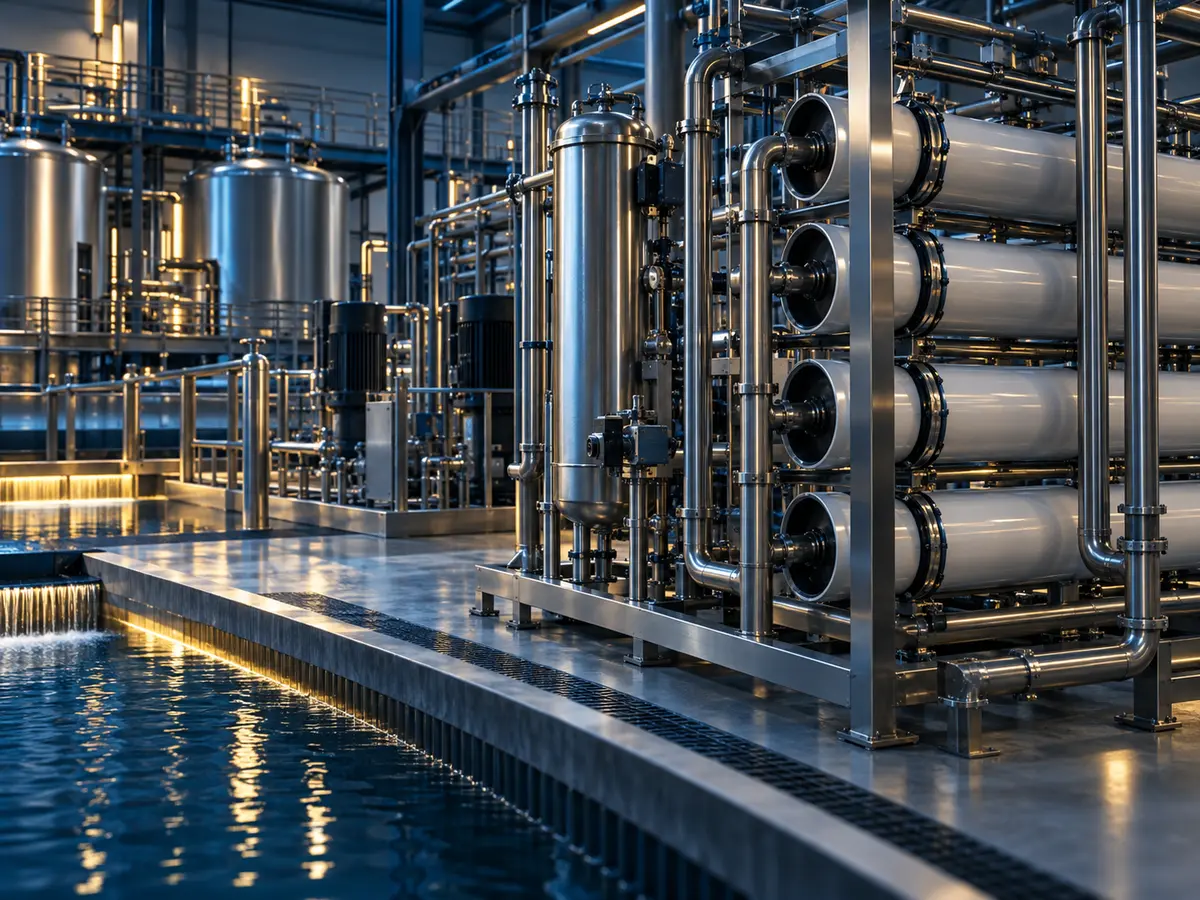
In Afyon, Türkiye, Baysu commissioned a greenhouse water treatment system with a product water capacity of 25 m³/h. The installation combined sand and activated carbon filtration, chemical dosing and RO, followed by dolomite filtration. Automatic flushing and a clean in place (CIP) system were included to support operation and membrane maintenance.
For a greenhouse project in Turkmenistan, Baysu supplied three sets of sand filtration systems rated at 1,920 m³/day each, three activated carbon filtration systems of the same capacity, and three RO systems rated at 1,440 m³/day each. The project included vertical RO units and separate electrical panels for the booster systems.
These installations illustrate how greenhouse water treatment can combine several process stages. The required flow and final water composition determine the design, while layout and maintenance access influence how the system can be operated on site.
Bringing water engineering into greenhouse planning
Baysu encourages greenhouse builders and investors to assess water quality early in project development. Sharing the source water analysis, expected demand and irrigation requirements gives the treatment supplier and cultivation team a practical basis for defining the system.
With engineering and manufacturing based in Denizli, Türkiye, Baysu develops water treatment systems for agricultural and industrial applications. Its greenhouse experience includes integrated filtration and RO installations, with automatic flushing, CIP and post-treatment incorporated according to project requirements.
For growers, the aim is irrigation water with a composition they can understand and manage. Building water treatment into greenhouse planning helps align the water supply with the nutrient programme and the daily needs of the facility.
For more information
Yavuz
https://seconddeskinternational.com/industries/water-environmental-technologies/
Tags
- Agriculture
- Sustainable Agriculture
- Agribusiness
- Agricultural Engineering
- Traditional Methods
- Iodine
- Ultraviolet
- Chlorination
- Ozone
- Solar Energy
- Geothermal
- Irrigation & Water Management
- consulting
- Wastewater Heat Recovery
- Membrane
- Infrared
- Soil And Water Conservation