Want Academic Impact? Drop the Journal, Try Mass Media
Published by Asit Biswas, Distinguished Visiting Professor, University of Glasgow in Academic
“Some of the world’s most talented people are in academia, but academia doesn’t have much impact on what the world discusses or the policies that are implemented. We do not shape public debates,” Professor Biswas told.
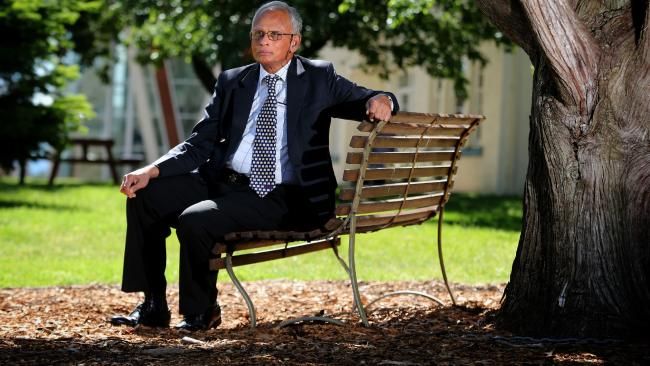 Asit Biswas is a self-confessed contrarian, an eminent professor who rails against what eminent professors to do: publish articles in esteemed journals.
He is a convert to the power of the popular media and an advocate for the moral purpose of academics to influence public policy.
“Some of the world’s most talented people are in academia, but academia doesn’t have much impact on what the world discusses or the policies that are implemented. We do not shape public debates,” Professor Biswas told a public lecture at Australian National University last week.
The issue is fundamental: the rewards and incentives driving promotions are built on publishing in academic journals. But academic journals have few readers, none of whom appear to be politicians or policymakers.
“In my field, water, the highest impact journal has six subscribers in India and 13 in China,” he said.
“That’s 19 subscribers for 2.6 billion people. We did some estimates and calculated that the number of people who will read your paper is a grand total of 10, and that includes the author.”
Professor Biswas, who is a distinguished visiting professor at the Lee Kuan Yew School of Public Policy, likes to joke that he started his life as an engineer “but quickly lost my way because I had some wonderful mentors”.
Among them was Indira Gandhi, whose government he advised when he worked as a senior public service for the Canadian government.
“She told me she wasn’t interested in water. She looked at me and said she was only interested in how to improve the standard of living of India’s poor, how to generate employment or reduce poverty. She told me to frame my question along the lines of how water can be a catalyst for regional development, how it can be an engine for economic growth.”
 Professor Biswas also realised Mrs Gandhi would consume summaries of the major stories in the nation’s media each day; that political influence came from the media, not academic journals.
It was a view of the world that he took with him even when, ironically he because co-founder and editor-in-chief of the International Journal of Water Resources Development 30 years ago.
He adhered to his opinion even as he authored 82 books and published more than 650 scientific and technical papers, which have been translated into 37 languages. He has received the Stockholm Water Prize, along with a raft of other international awards.
But it was last year when the full weight of his contrarian view came to light. With doctoral researcher Julian Kirchherr from Oxford University, he wrote an opinion piece for the The Straits Times called “Prof, no one is reading you”. He wrote: “Up to 1.5 million peer-reviewed articles are published annually.
“However, many are ignored even within scientific communities—82 per cent of articles published in the humanities are not even cited once.
“If academics want to have an impact on policymakers and practitioners, they must consider popular media, which has been ignored by them.”
To weeks later, the editor rang Professor Biswas.
“He said it had broken all records since The Straits Times had first been published 60 years ago. It’d had 140,000 (online) shares. The next highest was 40,000. There were requests from Turkey to Germany and Australia to publish it. I was flabbergasted. I asked myself, if 140,000 people shared it and read it, maybe it has had some impact.”
By Julie Hare | The Australian | November 23, 2016
Source: http://bit.ly/2fPpbou
Tags
Category: Academic
- Scientist
- Standards
- Water Policy
- Academies
- Academic Study
- Media & Communication
- Journalism
- News Journalism
2 Comments
In the context of India, there is absence of coherent long-term policies on control of communication by mass media with half-baked information, and generic opinions by all kinds of opinion-makers for a pervasive populism, also creates threat and panic in people due to regional polarization from social and political angle with parochial interest, keeping 'only self interest' to the fore.
For long, the water resources professionals had been silently working for the betterment of the society. However, they could not be role models for public in general, even for students of various disciplines! The role models are always some actor or actress of the time or a cricketer or a celebrity or someone alike them. Media for advertisements with huge payment of money is also using them, even if they have zero or limited knowledge on water and environment issues.
Unfortunately, the 'society by and large' is being misguided by information that floods through newspaper, media etc., especially bringing in some half baked concern and that only some environmentalists activists are concerned about India's development, despite very best professionals brains work hard to usurp them.
The media would have done justice if instead of some actor or actress or a cricketer or a celebrity or someone alike them achievements of water resources professionals could have been projected properly! Most of such professionals (except for a very few) toil without recognition and occasional accolade!
Published by Prof. Partha Sarathi Datta, Independent Consultant on Water & Environment
This is very informative
Published by Oluwatobi Aiyelokun, Environmental Engineer /GIS Specialist at Hermtech